- About
- Topics
- Story
- Magazine
- In-Depth
- Opinion
- News
- Donate
- Signup for our newsletterOur Editors' Best Picks......Send
Read, Debate: Engage.
| September 22, 2026 | |
|---|---|
| topic: | Climate Change |
| located: | Indonesia |
| by: | Garry Lotulung, Primagung Dary Riliananda |
Over the past few decades, accelerating global climate change has pushed Indonesia toward an escalating ecological crisis in the form of rising sea levels – further compounded by rapid development and industrial expansion. Several areas along the north coast of Java have begun to sink, gradually erasing not only land but also the memories of the people who have lived there for generations. Some residents have chosen to relocate, while others remain, striving to adapt in whatever ways they can. Policy responses intended to mitigate the impact remain far from sufficient.
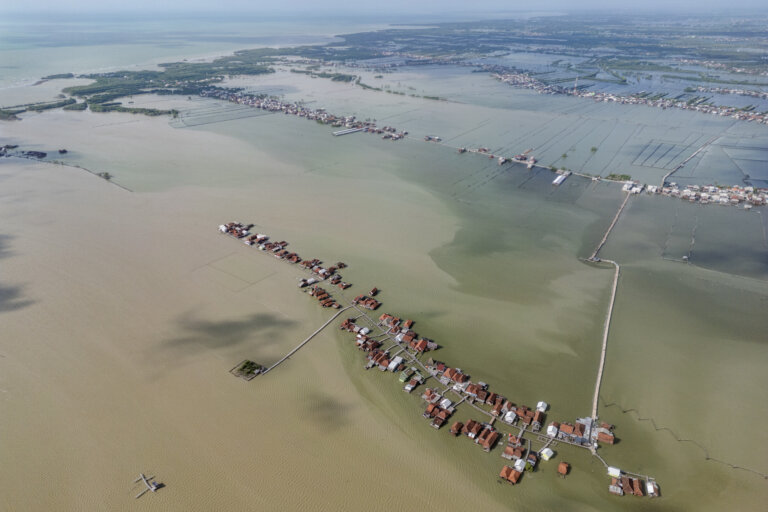
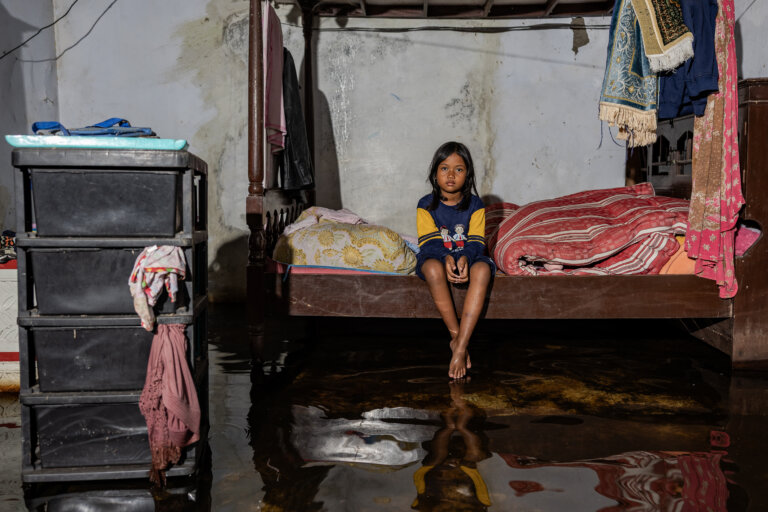
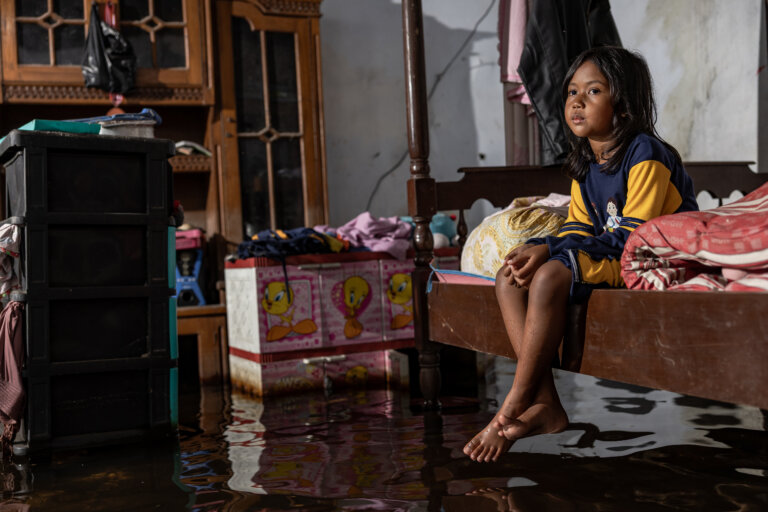
The wind blows strongly across the quiet village of Bogorame. It is four in the afternoon, yet little activity can be seen among residents of the hamlet located along the coast of Demak Bay, Central Java – about seven hours by road from Jakarta. Most choose to stay indoors with their families. This decision is not without reason: their homes must be guarded against seawater that begins flooding the road in the late afternoon and lingers until the following morning. In bad weather, the water can rise high enough to enter houses and remain there for days.
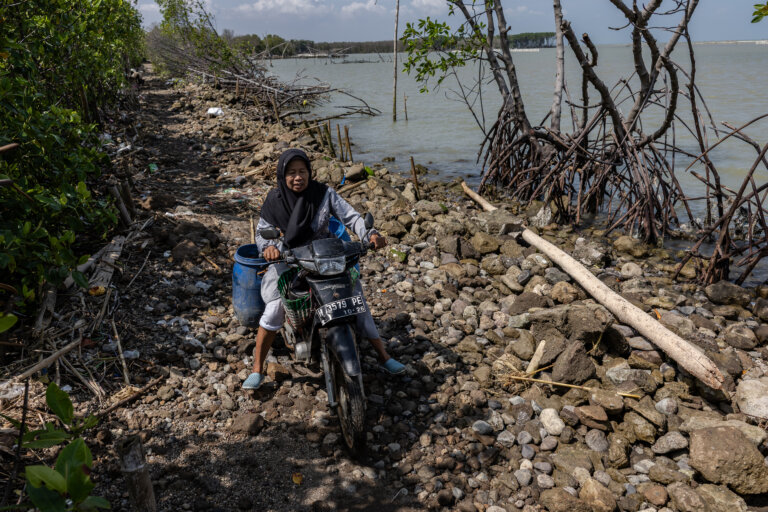
65-year-old Latifah, was sitting on the terrace of her house that afternoon, staring fixedly at the river in front of her home as its current strengthened after mixing with seawater. Not long after, the mother of five went back inside. ‘Recently the water has been rising quite fast, but fortunately it is not as high as it was two weeks ago,’ she said, pointing to flood stains on the wall that reached knee height during the last major inundation, when seawater submerged her home higher than usual and soaked her bed. She was forced to spend the night at her cousin's house.
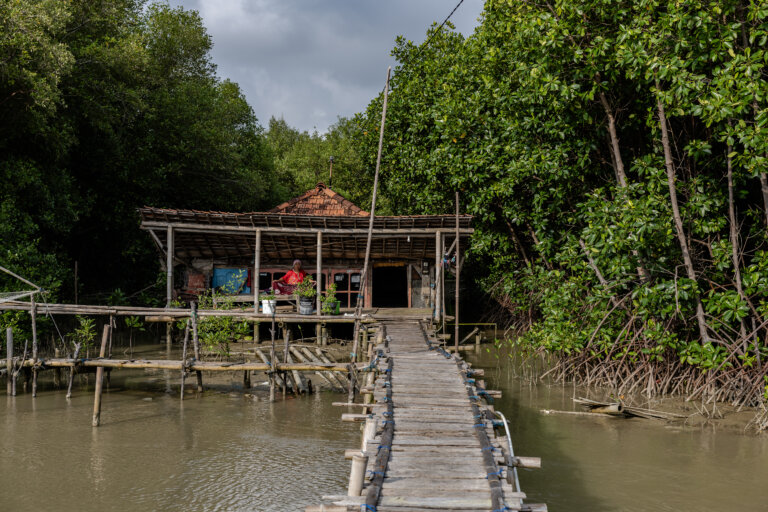
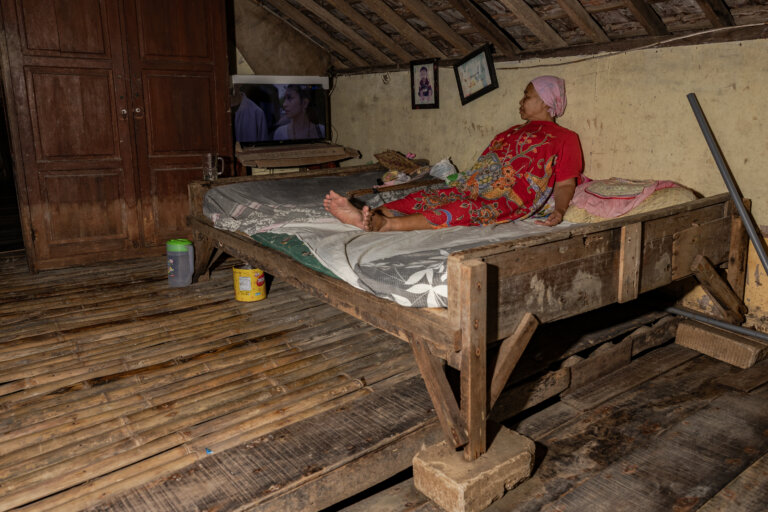
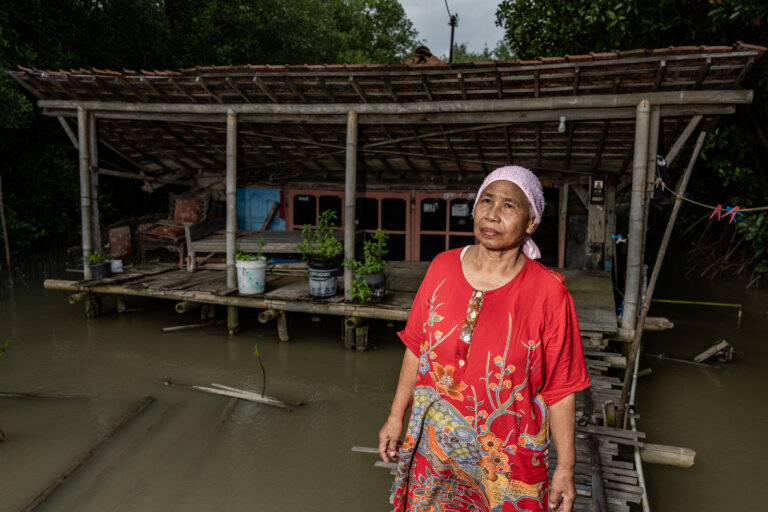
Inside her home, Latifah must walk with her head bowed. Built by her parents 40 years ago, the house now stands at barely half its original four-meter height. ‘We lived comfortably until the first tidal flood came in the mid-2000s,’ she said. Today, her belongings are crammed onto the top shelves of her wardrobe to be safe from daily floods.
The encroaching water has not just eroded her home; it has drowned her livelihood. Latifah used to cycle ten kilometres to Sayung Market at midnight to buy fish, which she would sell in front of her house every morning. However, the fastest route connecting the hamlet to Sayung market has been submerged and impassable for the past three years.
Five minutes’ walk from Latifah’s house, 75-year-old Sa’dullah, looks out at the partially submerged I’anatut Tholibin Islamic boarding school. Forced to close after tidal floods destroyed its only access bridge, ‘There used to be many students from neighbouring areas who came to study here. I still remember that in its first year, the school accommodated 185 students. Now there are only about 27 students left, with five teachers, including me,’ he said.

Access to the isolated village of Bogorame is increasingly dangerous, with the last remaining coastal road battered daily by severe waves and unpredictable tidal surges. This local devastation reflects a broader crisis. Those who remain, like Sa'dullah, often do so because limited income prevents them from moving to safer areas.
Lacking the funds to elevate the historic school, Sa'dullah holds on to hope. ‘We will try to repair the bridge independently with the villagers during Ramadan,’ he said. ‘Hopefully by Eid, the water will begin to recede.’
Half an hour from Bogorame, Rohimah, sat chewing betel nuts by what used to be the back door of her late sister’s house – which has become the main entrance – in Sriwulan Village, Demak Regency. The road in front of the house has disappeared beneath floodwater. ‘Seawater began entering the inland areas of Sriwulan when large-scale housing developments in West and North Semarang expanded rapidly in the 1990s. I know because I once worked as a security guard at one of those housing complexes,’ said 43-year-old Nurhadi, Rohimah’s son.
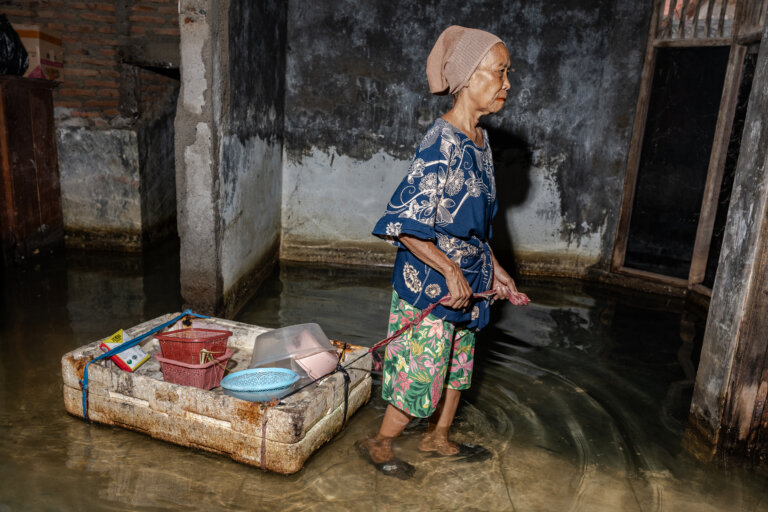
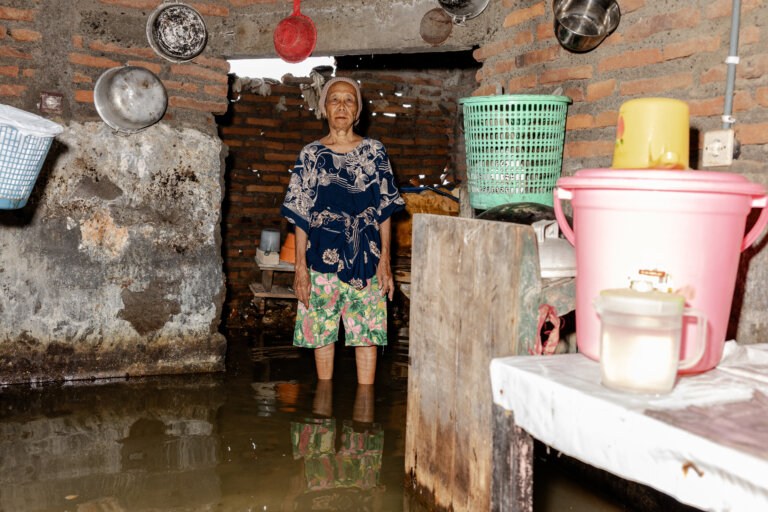
Much of the house is partially submerged, though some rooms—such as the kitchen and one bedroom—remain usable after being elevated. She refuses to leave, despite repeated requests from Nurhadi, who lives with his own family directly across from her. The 70-year-old woman insists on caring for her late sister’s home. ‘The most difficult time is when it rains, because the water rises higher and the air feels colder. Sometimes my legs feel stiff when I walk,’ Rohimah said.
Sriwulan, Bogorame, and other villages and hamlets in Sayung District along the coast of Demak Regency stand as stark examples of how climate change has intensified the impact of rising sea levels in recent decades. Thousands of residents have witnessed firsthand how vast stretches of land once covered with green rice fields have gradually turned into open sea over the past thirty years.
Research from Gadjah Mada University (UGM) and Wetlands International highlights a severe crisis in Demak: tidal floods up to 1.63 metres and land subsidence exceeding a metre per year. According to the research, this ecological shift has destroyed 80 per cent of the original mangrove cover and caused a two-kilometre coastline retreat, forcing all but the poorest villagers to abandon their homes for safer ground.
In Timbulsloko, rising tidal floods force residents into a constant battle to stay above water. Every five years, locals must spend their savings to elevate their homes by at least a metre. ‘We are like tenants on our own land,’ said Nuryadi, who has raised his mother's house twice. ‘Of course, we would move if circumstances allowed.’
With original roads permanently submerged, residents navigate the hamlet via a fragile, two-kilometre self-made road network of wood and bamboo. This makeshift infrastructure extends to the public cemetery, which the community has elevated five times. Despite the encroaching tides and frequently submerged walkways, residents continue to visit the fragile burial ground to pray for their ancestors. ‘We are grateful that this cemetery can still be elevated,’ resident Sonhaji said, ‘so we are able to pray for them in person.’
Beyond road improvements, Central Java is tackling the severe coastal threats with innovative infrastructure. In 2024, the province provided 111 households in Timbulsloko with $3,000 (Rp 50 million) floating homes. Built on plastic barrels and lightweight concrete, the structures are designed to rise with the tides.
While the floating houses have an estimated lifespan of just a decade, beneficiary Wanto says it buys residents crucial time to save money, noting that conventional homes barely survive five years under current conditions.
The government has also invested $90,000 (Rp 1.4 billion) in a 74-panel, solar-powered water pump system in nearby Sayung. While Greenpeace Indonesia has supplemented this by donating solar panels directly to families, Wanto warned that poor quality control has left many of those independent panels broken or unusable.
At the same time, local initiatives have emerged from within the communities themselves. Since 2000, 56-year-old Pasijah, has worked to protect her home in Rejosari Senik Hamlet, Bedono Village, Demak, Central Java, by planting mangroves – long before tidal flooding permanently submerged the area that once housed around 200 families.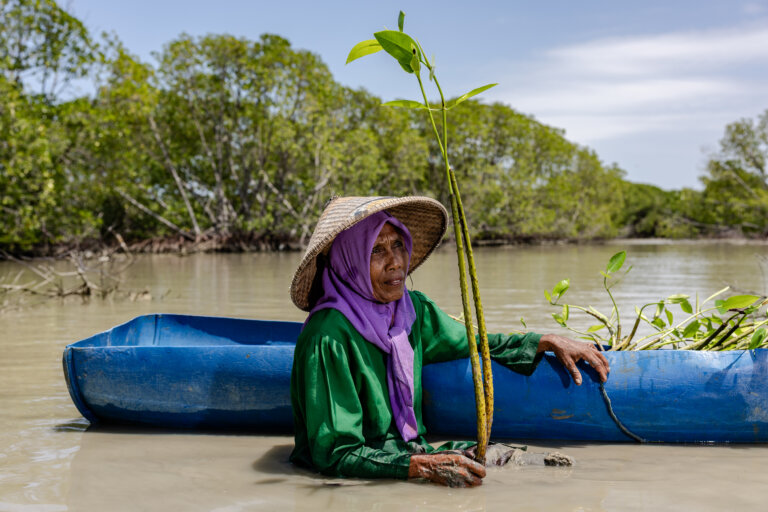
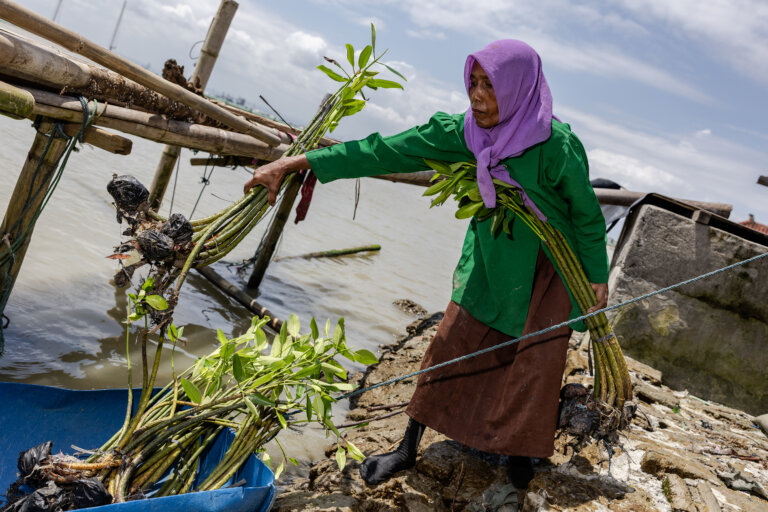
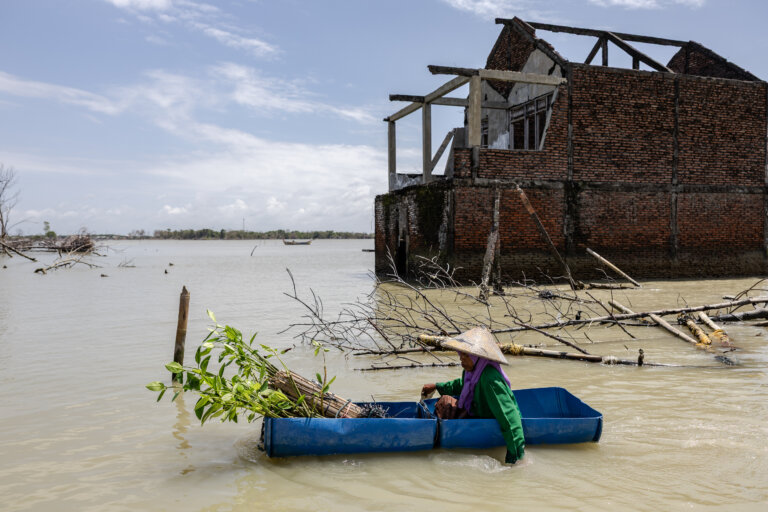
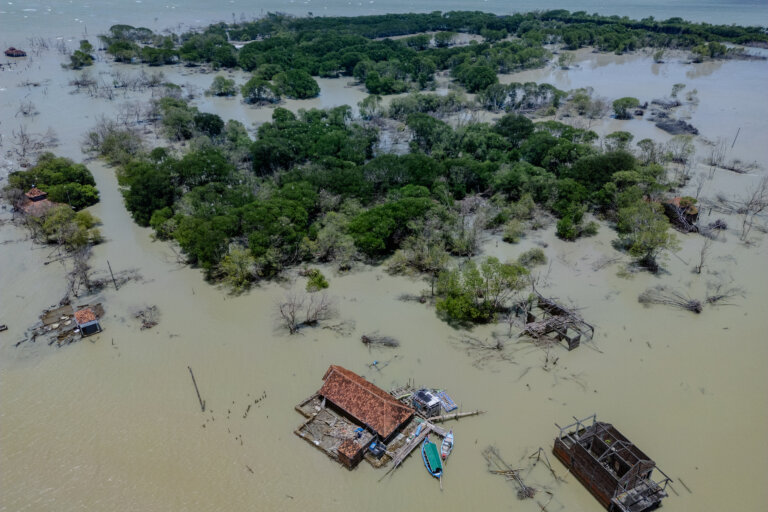

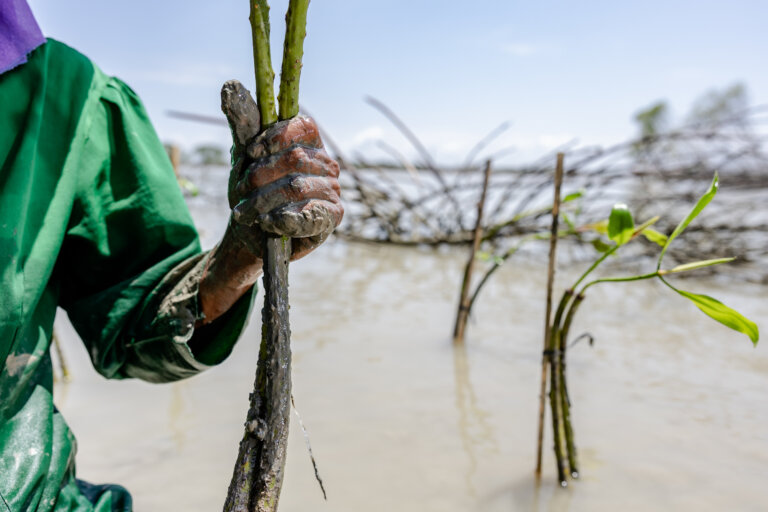
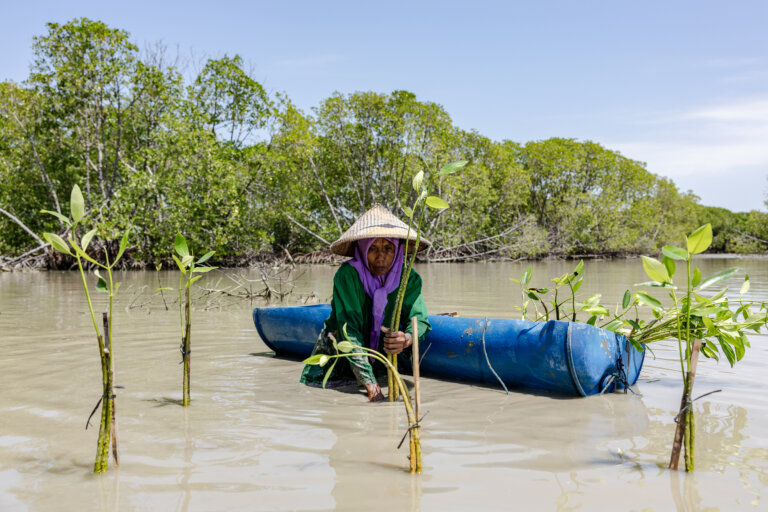

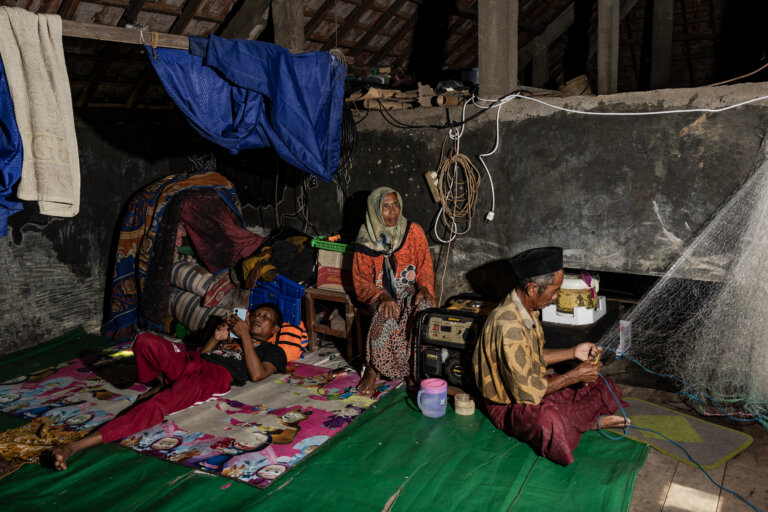
While the mangrove seedlings she planted slowly began to grow, the sea did not allow enough time for other residents to follow her example. Many chose to leave. The first exodus occurred between 2006 and 2007, when seawater permanently inundated the village. Despite being left behind by most of her neighbours, Pasijah and her family continued planting mangroves and maintaining their home as best as they could. Today, her house is the only one that remains standing and inhabited.
Sometimes, she is assisted by her 61-year-old husband Rokani, and her 35-year-old son, Ichwan, in collecting mangrove seedlings. She understands that the seedlings require sufficient time to mature. There are moments of despair when her efforts appear futile. “Ichwan and I planted around 15,000 seedlings in 2021. The next morning, when I checked, they had all been washed away by the waves. It took an entire day to plant them,” Pasijah recalled.
Nevertheless, she and her family continue planting mangroves as long as they are physically able.
A similar collective effort has taken place in Sriwulan, where Maryati leads a community effort to plant sea pines, mangroves, and cypress seedlings to buffer the village against strong currents and tidal flooding. This grassroots defence is vital in Demak, a region where tidal floods reached an estimated 1.63 metres last year.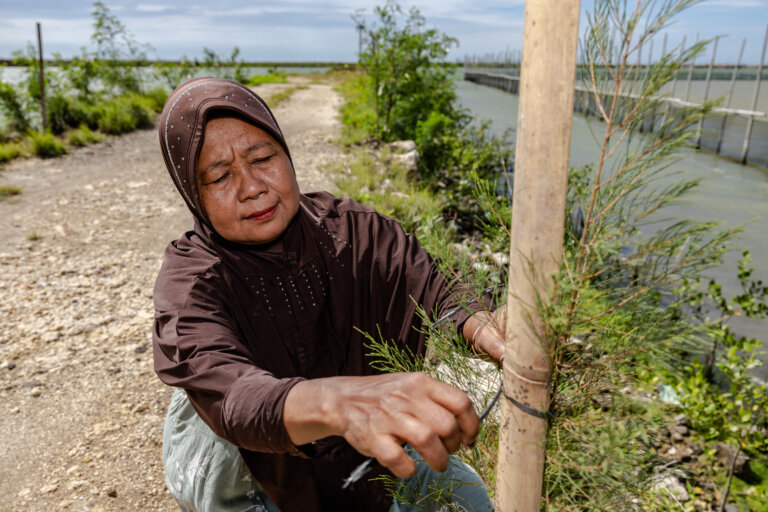
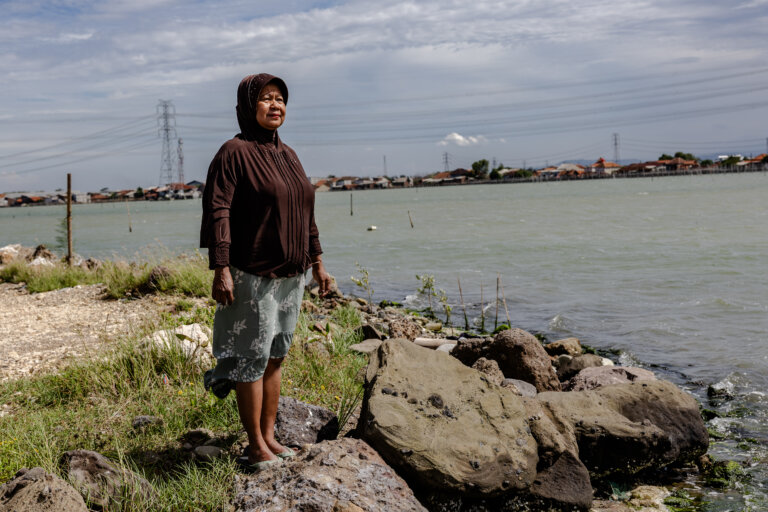
As the neighbourhood head’s wife, Maryati champions environmental awareness, organising emergency waste collection when weather severs local roads. While she and fellow resident Pasijah have partnered with public and private institutions on coastal greening programmes, both stress that these planting initiatives must be strictly sustained to effectively combat the ongoing erosion.
Mangrove restoration is often presented as a go-to-solution, but it does not automatically resolve tidal flooding. Each area faces distinct causes of tidal flooding that must first be properly identified.
Without long-term commitment, restoration efforts risk becoming unsustainable. Mangroves and other coastal vegetation require ongoing maintenance and monitoring. Additionally, erosion and shifting soil conditions in coastal zones can hinder plant growth and survival, further complicating recovery efforts.
In Depok Village, this crisis is already a daily reality. Streets are permanently coated in moss from chronic, knee-high inundation, a situation recently worsened by 17 days of highland flash floods. ‘Every year, the entire village is submerged from December to May,’ explained 41-year-old Tahrudin.
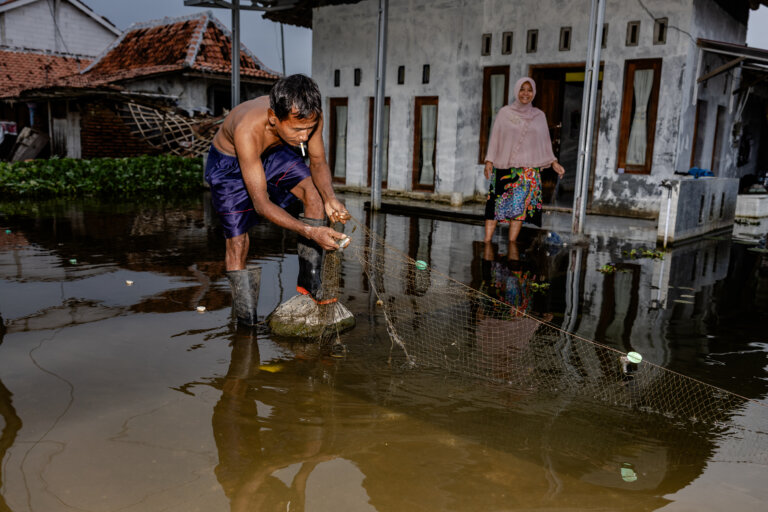
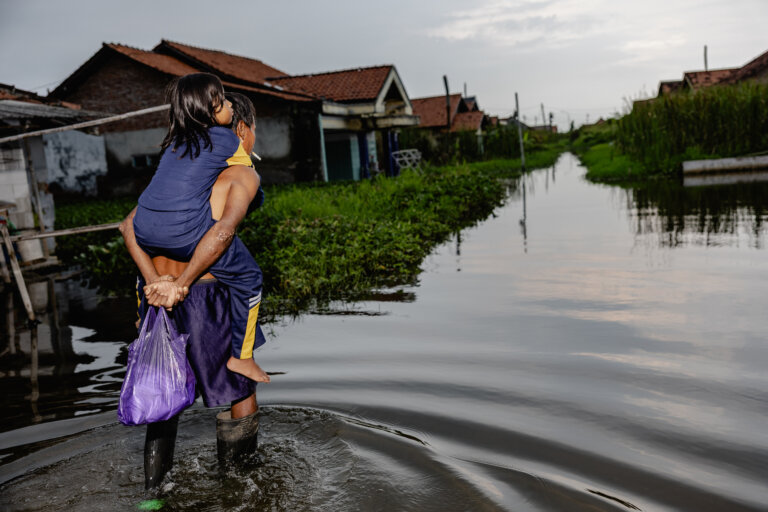
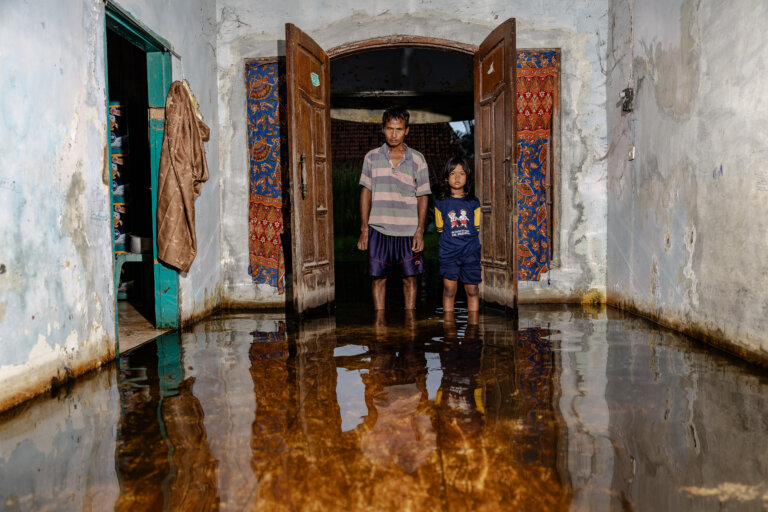
The relentless waters have decimated the local economy. Tahrudin lost his farmable rice fields to the floods. He now scrapes by with construction jobs or fishing just to keep his 8-year-old daughter, Inara Dinyanti, in school. Surrounding fish farmers suffer similar fates, with floodwaters routinely washing away months of cultivation before harvest, according to local neighbourhood head Ismaroh.
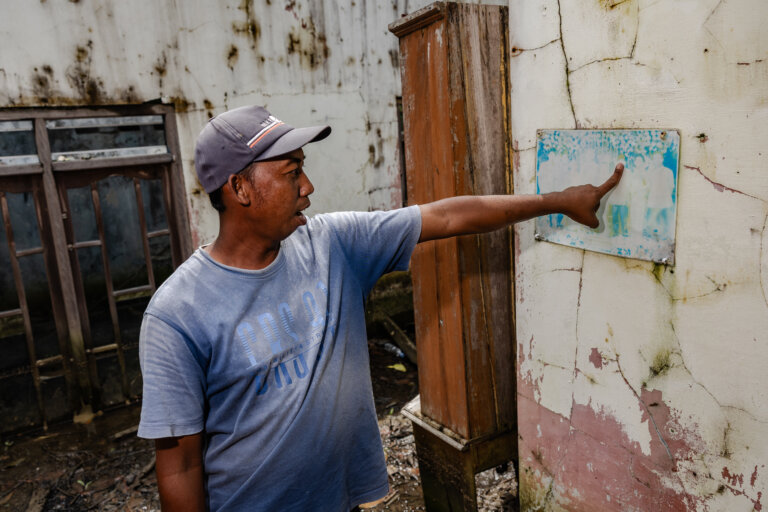
In Semonet, West Pekalongan, 35-year-old Karyadi, returned to the ruins of the home he abandoned in 2021. The roof has collapsed, leaving only the wall foundations and window frames, now overgrown with wild mangroves that continue to rise. Some belongings – cabinets, a television - remain inside, intentionally abandoned. Even so, his house is in better condition than the neighbouring one, which has been completely erased by waves and coastal abrasion.
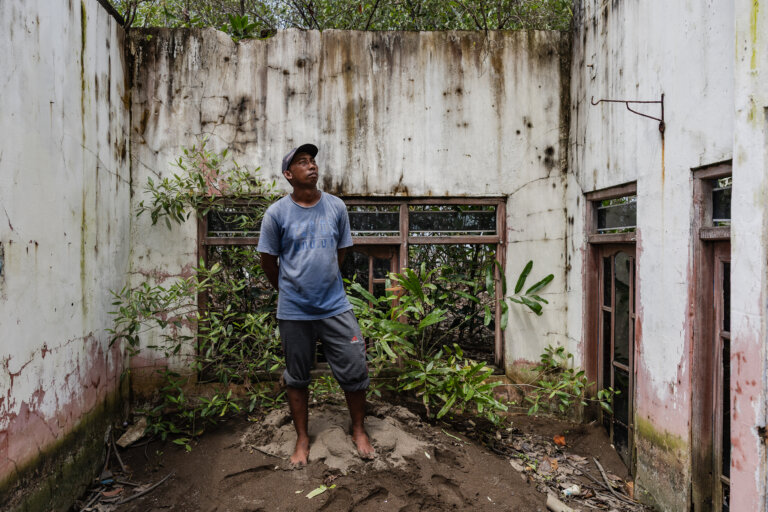
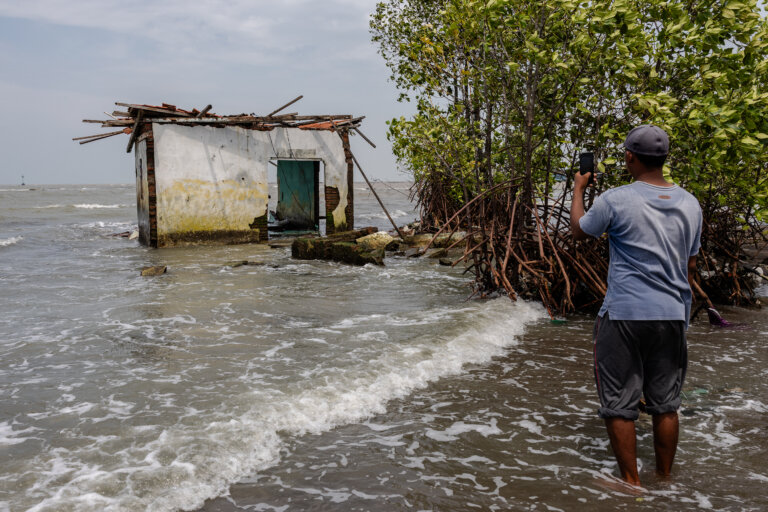
Today, dead electricity poles mark where a thriving community of jasmine farmers once lived.
His story echoes a broader regional crisis, where worsening tidal floods continually force villagers to abandon their homes and retreat to safer ground. Now a labourer, Karyadi documents Semonet’s drowned remains on Facebook. ‘I want to share the impact of the tidal floods that erased the land where I grew up,’ he said, hoping his footage serves as a stark warning of nature's changing tides.