- About
- Topics
- Story
- Magazine
- In-Depth
- Opinion
- News
- Donate
- Signup for our newsletterOur Editors' Best Picks......Send
Read, Debate: Engage.
| June 23, 2026 | |
|---|---|
| topic: | Arts |
| tags: | #West Papua, #Indonesia, #women's football, #gender equality, #Female coaches, #FIFA |
| located: | Indonesia |
| by: | Robert Bociaga |
The first time Erma Karafir learned to run, she was not on a football field. She was growing up in a crowded household in Jayapura, Indonesia, where alcohol often dictated family life. Her father drank heavily, arguments erupted without warning, and violence sometimes followed. With seven siblings packed into the same fragile world, there was little room to escape. But Erma found one. Whenever tensions rose, she left the house and joined neighbourhood kids playing football.
'When I played football, I felt happy,' she recalled. 'I felt joy. I felt like myself.'
That simple act of running after a ball would eventually carry her far beyond West Papua. It would bring scholarships, national championships, a chance to study in the United States and enough prize money to buy her mother the house she had always dreamed of owning.
Yet football could not entirely protect her from the forces she was trying to escape.
Her story offers a glimpse into a reality often overlooked by global conversations about women in sport.
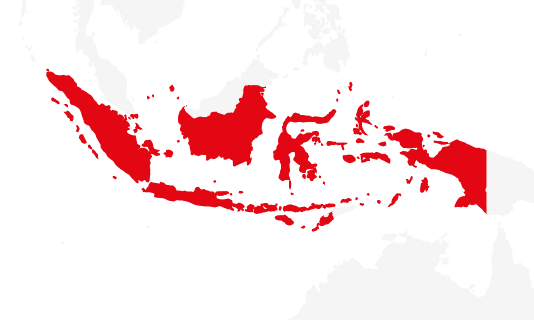
Located on the western half of New Guinea — the world's second-largest island, split between Indonesia and Papua New Guinea — West Papua remains one of Indonesia's most resource-rich yet economically marginalized regions. Long shaped by conflict, militarisation and uneven development, the region sits atop immense reserves of natural wealth, yet many Indigenous Papuans continue to face poverty, limited educational opportunities, and weak public services.
For some communities, the chasm between vast natural wealth and grinding poverty has bred deep frustration and despair, with alcohol becoming both an escape and a symptom of this broader distress. Research from the Australian National University links binge drinking to poverty, political exclusion, and cultural trauma. Yet Indigenous women bear the heaviest cost—facing domestic
violence, economic insecurity, and alcoholism inside the home, all worsened by displacement and political stress.
Against that backdrop, football has become an important outlet for some girls. Women's football in West Papua remains small compared to the men's game, but community-based development programs such as SSB Mutiara Timur, a football school in Jayapura, have helped produce national-team players and provincial champions. Participation remains limited, however, by inadequate facilities, scarce funding, safety concerns, and family expectations.
As FIFA pushes for greater female representation in football leadership—including new regulations requiring female coaches and technical staff at women's international competitions from 2026 onward—the obstacles facing many young women in Indonesia's easternmost region remain far more fundamental.
'For many girls, football is only the entry point,' Heidi Scheunemann, a German coach who since 2009 helped establish girls' football programs in West Papua, Indonesia, told FairPlanet. 'What they really need is a safe place, people who believe in them, and some distance from the problems they face at home.'
'Most of the kids in Papua have talent,' Erma said. 'But there is nobody to show them they can do more.'
When Scheunemann first encountered Erma, she was a small, determined player competing against boys. Talent was immediately apparent. What interested Scheunemann just as much, however, was what happened beyond the field.
'Many girls arriving at training came from homes marked by poverty, violence or family breakdown,' Scheunemann said, quickly realising football alone would not be enough. Alongside coaching, she built a support network focused on mentoring, leadership and entrepreneurship, helping players imagine futures beyond the pitch.
Through the sport, Erma began winning scholarships and representing teams in regional tournaments. By her early teens, she was helping her teams win championships, eventually earning a scholarship opportunity to study in the United States—an unlikely path for a girl from a troubled household in West Papua. But academic struggles, isolation during the pandemic and a spiral into alcohol, drugs and depression led to visa problems and a return home that felt like failure.
Yet football still had one more gift to offer. Soon after returning, she joined Papua's team at Indonesia's National Sports Week, one of the country's most prestigious sporting competitions.
The team's success brought prize money that enabled Erma to buy a house for her family, fulfilling a dream her mother, a kindergarten teacher, had spoken about for years. 'I wanted to make my mother happy,' Erma said, regretting till today that her achievement was short-lived. Only months after the family moved in, her mother fell seriously ill and died.
'I didn't know what to do anymore,' Erma recalled. 'I felt like the reason I was fighting so hard had disappeared.'
The loss pushed her back toward alcohol and left her struggling to find direction. Yet football remained a constant. Today, Erma is studying English at university, playing in local tournaments and hoping to one day mentor younger girls facing challenges similar to her own.
For Scheunemann, that uncertainty highlights the limits of what sport alone can achieve. 'Football can open doors,' she said. 'But young women need support long after the football part is over.'
FIFA's efforts to increase the number of women coaches and leaders are intended to create more opportunities for women within the game. Indonesia has also seen more former female players move into coaching and development roles. Yet the experiences of Scheunemann and Erma suggest that leadership pathways begin long before coaching licenses and technical appointments. After decades of mentoring girls, helping them secure scholarships and teaching leadership and entrepreneurship alongside football, Scheunemann remains largely outside the formal structures of the sport.
In West Papua, many girls first have to overcome poverty, family instability, limited educational opportunities and social expectations that discourage their participation in sport. Keeping talented players in the game can be as challenging as developing them.
Erma said she hoped one day to mentor younger girls, though self-doubt remains a challenge. 'I want to help kids,' she said. 'But sometimes I ask myself, how can I help others if I still struggle with my own mistakes, with drinking alcohol occasionally?' If her university schedule allows, she may soon begin assisting with coaching at SSB Mutiara Timur, the football school where she first found the support that helped change her life.
For Scheunemann, that would represent a success greater than any tournament victory. The aim was never simply to produce football players, but to help young women discover possibilities they might never have imagined.
While FIFA and football federations are working to increase the number of women in coaching and leadership roles, West Papua's experience highlights a simpler reality: creating positions at the top is only part of the challenge. Girls must first be given the opportunity to stay in school, remain healthy, continue playing and imagine futures larger than the circumstances into which they were born.
 | Robert Bociaga Author |