- About
- Topics
- Story
- Magazine
- In-Depth
- Opinion
- News
- Donate
- Signup for our newsletterOur Editors' Best Picks......Send
Read, Debate: Engage.
| tags: | #COP30, #land rights, #indigenous rights, #Traditional medicine |
|---|---|
| located: | Ghana |
| by: | Nana Kwesi Osei Bonsu |
Benimasi-Boadi, nestled in the verdant heart of the Ashanti region in southern Ghana, is more than just ancestral land; it is a living testament to the enduring bond between nature and culture.
Today, this heritage is under threat. The life-giving waters of Bokro, Chuwaa, Adampaasuo, Pankrono, and Subin, each with its own spirit, story, and song, are being encroached upon and polluted. The once-thriving forest, where odum and wawa trees towered above the land, has been reduced to scattered bush and scrub. Although the forest is gone, remnants of its spirit persist in the undergrowth, as evidenced by bushes that continue to harbour healing herbs bearing the memory of a sacred ecosystem.
Despite the degradation, the memory of ancestral healing practices still lingers. In earlier times, elders prepared a sacred herbal brew using a slow and deliberate method that honoured both the medicinal and spiritual significance of the forest. Herbs such as nunum (African basil), prekese (Tetrapleura tetraptera), kakapenpen (Alchornea cordifolia), and nyamedua (the “tree of life”) were gathered, washed, and gently crushed to release their healing oils. The mixture was simmered over a low fire for 24 to 48 hours, then cooled and shared communally. Every member of the community drank it on a weekly basis. This ritual, beyond its medicinal significance, was a ceremony, accompanied by storytelling, drumming, and prayer.
“I remember my grandmother, Akosua Adutwumwaa, sitting by the fire, stirring the pot with a carved wooden ladle,” recalls Odeneho Odishie Kwabena Badu, a descendant and current custodian of the land. “She would say, ‘This brew is not just for the body, it is for the soul of our people.’ Today, we struggle to find the herbs, but we still tell the stories.”
The wisdom of Benimasi-Boadi is not isolated; it is deeply rooted in the legacy of the Ashanti Empire. Although King Osei Tutu I, the visionary founder of the Ashanti Empire, never resided on this land, he bestowed it upon his beloved consort, Oheneyere Yaa Tutuwaa, as a gesture of honour and enduring affection. Yaa Tutuwaa, a matriarch of the royal Asona Abusua lineage, played a quiet but influential role in shaping succession and land stewardship policies. Her presence gave the land spiritual and cultural significance, and her final resting place remains within its bounds, a sacred site preserved by her descendants.
Modern science now affirms what our ancestors have long known: these plants are immune system regulators. Nunum (African basil), contains eugenol and thymol, which reduce inflammation and oxidative stress. Prekese (Tetrapleura tetraptera) stimulates white blood cell production and supports cardiovascular health. Kakapenpen (Alchornea cordifolia) activates immune cells and fights infections, while nyamedua is rich in antioxidants and vitamin C, enhancing cellular repair and resistance to disease.
This living tradition aligns with global efforts to integrate indigenous knowledge into sustainable development. The World Health Organisation’s Global Traditional Medicine Strategy 2025–2034 emphasises universal access to safe, effective, and people-centred traditional medicine. Similarly, the UN Convention on Biological Diversity recognises the role of Indigenous Peoples and local communities in biodiversity conservation through Article 8(j) and the Kunming-Montreal Global Biodiversity Framework.
Benimasi-Boadi remains a model of ecological harmony and cultural continuity. Its practices demonstrate the values of Indigenous communities worldwide, where healing is communal, nature is revered as sacred, and knowledge is passed down through generations.
Recent data paints a sobering picture. In 2024 alone, the Ashanti region lost 23,700 hectares of natural forest, releasing 14.8 million metric tons of CO₂ into the atmosphere. Over the past two decades, 296,394 hectares of tree cover have vanished, numbering nearly 20 per cent of the region’s forested area. The Apamprama Forest Reserve has lost a third of its cover in just 20 years due to gold mining. These activities, which degrade the land, disrupt the delicate balance of ecosystems. Rivers dry up, soil erodes, and species vanish. The forest’s ability to regulate climate, purify water, and support livelihoods is, by consequence, compromised.
On 5th February 1981, the Kumasi Town Planning Committee approved a zoning scheme that converted 40 per cent of Benimasi-Boadi’s ancestral territory into urban development, leaving 60 per cent for nature conservation. Initially presented as a balanced compromise, the scheme marked the beginning of a slow erosion of indigenous land rights. The urbanised portion rapidly gave way to concrete and private developments. At the same time, the conservation areas were left vulnerable to neglect and exploitation, often with tacit approval from fiduciaries within the Manhyia Palace.
Among the most concerning developments is the role of Kwame Nkrumah University of Science and Technology (KNUST). Once a beacon of academic excellence, KNUST has expanded into sacred lands near Benimasi-Boadi under the guise of educational development, without the Free, Prior, and Informed Consent (FPIC) of the Indigenous custodians, as required by the United Nations Declaration on the Rights of Indigenous Peoples (UNDRIP).
Historically, KNUST’s land holdings were granted through customary arrangements by the Asantehene, the King of the Ashanti Kingdom, who serves as the university’s Chancellor. However, no formal compulsory acquisition by the Government of Ghana was ever documented for the Benimasi-Boadi lands. In fact, a statutory declaration filed by the Indigenous People of Benimasi-Boadi, Huahi Achama Tutuwaa Royal Family, affirms that the land was never legally transferred to KNUST or any institution.
This was confirmed in November 2024, when the Kumasi Circuit Court ruled in favour of the Royal Family, affirming their allodial title to 1,298 acres of land in Benimasi-Boadi. The court found that King Osei Tutu I originally gifted the land to his consort, Oheneyere Yaa Huahi Achama Tutuwaa. It had been under uninterrupted family stewardship for generations.
Despite this, KNUST has continued to expand into surrounding areas, such as Boadi, with a tendency to treat sacred land as though it were vacant property. No environmental or cultural impact assessments were made publicly available. Decisions were made behind closed doors, erasing a living repository of Indigenous science and cultural memory. As the Asantehene himself stated, “unused university land is not waste,” implying future expansion plans that further threaten Indigenous stewardship.
This situation underscores the urgent need for Ghana to institutionalise FPIC in land governance, as advocated by civil society organisations like WACAM and A Rocha Ghana, in alignment with global calls for ethical land use and Indigenous rights.
In response to the escalating threats facing Benimasi-Boadi, I founded Land Rights Defenders Inc. (LRDI), an Indigenous-led public charity dedicated to protecting ancestral lands, defending Indigenous rights, and empowering communities through legal advocacy, education, and international partnerships. Through LRDI, we have submitted spatial data and legal documentation to the United Nations Environment Programme, filed complaints with the Human Rights Council, and actively advocated for the enforcement of Ghana’s Land Act 2020 (Act 1036).
“Protecting land helps preserve the stories that shape who we are.”
Our work is not just about legal boundaries; it is about cultural survival. And that story is deeply personal. I have chronicled this journey in my forthcoming memoir (due to be released in March 2026), The Last Guardian of Ashanti, which explores the fight to protect Benimasi-Boadi, the legacy of Indigenous resistance, and the spiritual bond between land and lineage. I invite readers from all walks of life to discover this story and stand with us.
Benimasi-Boadi is more than a place; it is a living archive of ecological wisdom, cultural resilience, and ancestral stewardship. If we lose it, we lose a library of health, heritage, and harmony.
As the world prepares for COP30, hosted in the Brazilian Amazon, the struggle of the Ashanti people is critical. COP30 is expected to prioritise Indigenous rights, forest protection, and climate justice. The preservation of Benimasi-Boadi is a Ghanaian responsibility and a global imperative.
In protecting this sacred land, we preserve a piece of humanity’s shared ecological heritage.
Still, this protection must also reckon with a grave and growing threat across the Ashanti Region: illegal gold mining, locally known as Galamsey. Although Benimasi-Boadi has not yet been scarred by this practice, nearby forest reserves, such as Apamprama, are being ravaged by unregulated operations that pollute rivers, strip the land, and silence the forest’s songs.
As our elders say, “Gold may glitter, but it cannot heal the land.” True wealth lies not beneath the soil, but in the harmony between people and nature. Let COP30 be a turning point, for policy, but also for conscience. Let the world listen to the wisdom of the forest before it is silenced forever.
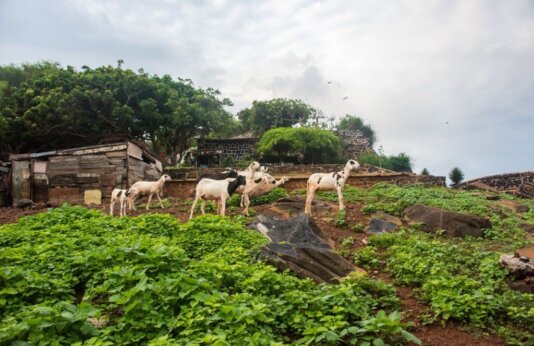
Images by Nana Kwesi Osei Bonsu.