- About
- Topics
- Story
- Magazine
- In-Depth
- Opinion
- News
- Donate
- Signup for our newsletterOur Editors' Best Picks......Send
Read, Debate: Engage.
| topic: | Human Rights |
|---|---|
| located: | Palestine |
| by: | Mohammed Nafez Altooll |
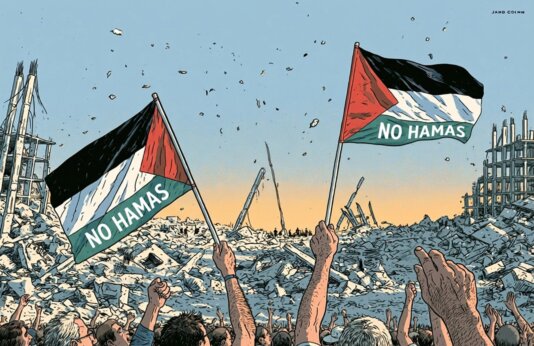
As 26 June approaches, growing numbers of Palestinians across the Gaza Strip are discussing what many hope will become one of the most significant public demonstrations against Hamas in years. organised under the slogan 'We Want to Live,' the initiative reflects mounting frustration over years of political repression, economic collapse, and the devastating human consequences of the ongoing war.
The campaign is organised by a network of Gaza activists living abroad in co-operation with Palestinians inside the Strip. Over recent weeks, organisers have relied on social media, personal networks, and grassroots communication to encourage peaceful public participation. Their objective extends beyond a single day of protest: they hope 26 June will mark the beginning of a sustained civic movement calling for dignity, accountability, and meaningful political change.
Although the current campaign is new, its message is rooted in a longer history. The slogan 'We Want to Live' first emerged during protests in Gaza in 2017, when demonstrators demanded economic opportunity, civil rights, and greater government accountability. Today, many Palestinians see the renewed campaign as a continuation of those aspirations, shaped by years of additional hardship and conflict.
The timing is significant. More than a year and a half of war has transformed nearly every aspect of life in Gaza. Large parts of the territory lie in ruins. Hundreds of thousands of families have experienced repeated displacement, while many have lost relatives, homes, employment, and access to basic services. Daily survival has become the central concern for much of the population.
Against this backdrop, some Gazans argue that public attitudes are changing. Fear that once discouraged open criticism of Hamas appears, for some, to be giving way to a belief that silence offers little protection from continuing hardship. Whether that perception is shared widely enough to translate into mass participation remains uncertain, but organisers believe the current moment presents an opportunity that has not existed for years.
An important feature of the current initiative is the role played by Palestinians living abroad. Gazans who have settled in Europe, North America, and elsewhere have become increasingly active in public discussions about governance, democratic institutions, freedom of expression, and civic participation.
Through online platforms, they share experiences from societies where governments are subject to public scrutiny and where citizens are able to criticise political leaders without fear of arrest. These conversations have encouraged broader discussions inside Gaza about accountability, individual rights, and the responsibilities of political leadership.
For many younger Palestinians, these debates raise fundamental questions. Why should citizens have no peaceful means of influencing decisions that shape their future? Why should demands for basic services, transparency, and political participation be viewed as acts of disloyalty? Such questions are now being discussed more openly than in previous years.
History suggests that movements demanding economic relief sometimes evolve into broader calls for political reform.
Poland’s Solidarity movement began as a labour movement before becoming a catalyst for democratic transformation. In East Germany, public demonstrations gradually expanded into a nationwide movement that contributed to the fall of the Berlin Wall. The Velvet Revolution in Czechoslovakia likewise demonstrated how sustained peaceful civic pressure could produce profound political change.
These historical experiences differ greatly from Gaza’s unique political and security environment. The comparison is not one of circumstances but of principle: societies facing prolonged economic hardship, political stagnation, and declining public trust often witness growing demands for dignity, representation, and accountability.
No one can predict what will happen on 26 June. The demonstrations may attract significant participation, they may remain limited, or they may face substantial obstacles. The response of Hamas, the willingness of ordinary citizens to participate, and the broader security situation will all influence the outcome.
Whatever happens, the discussions surrounding the demonstrations already reveal a noticeable shift within parts of Gaza’s society. Topics that were once largely confined to private conversations - including governance, civil liberties, political accountability, and the future of Palestinian leadership - are increasingly entering public debate.
Whether 26 June ultimately becomes a historic turning point or simply another episode in Gaza’s difficult modern history cannot yet be known. Yet the emergence of organised, peaceful calls for accountability reflects an important development in itself.
For many Palestinians in Gaza, the central demand extends beyond immediate humanitarian relief. Increasingly, it includes the aspiration to live with dignity, participate in shaping public life, and build institutions that are accountable to the people they govern.
If that aspiration continues to grow, the significance of 26 June may ultimately lie not only in the demonstrations themselves, but in the possibility that they represent the beginning of a broader civic conversation about Gaza’s future.