- About
- Topics
- Story
- Magazine
- In-Depth
- Opinion
- News
- Donate
- Signup for our newsletterOur Editors' Best Picks......Send
Read, Debate: Engage.
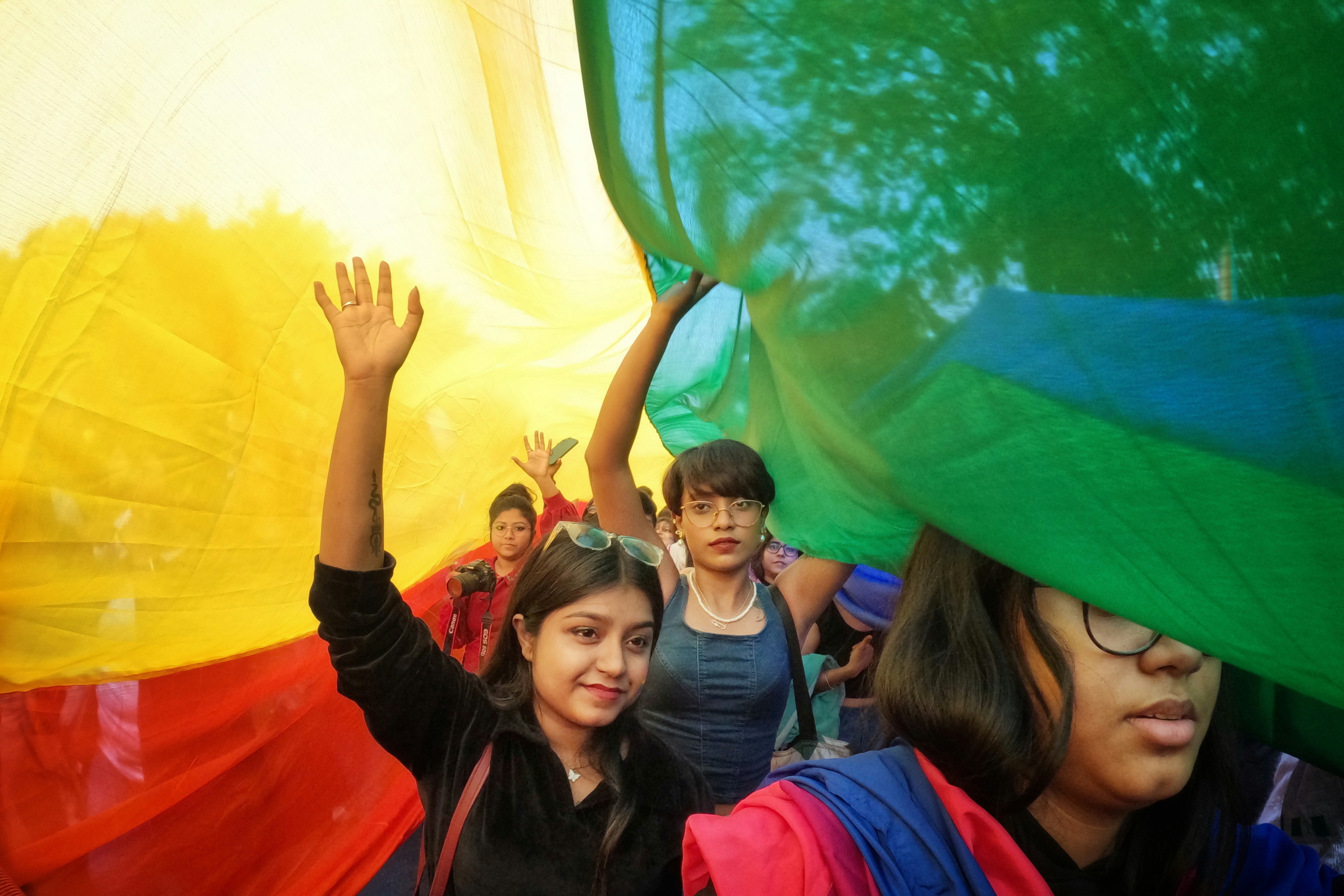
India is a country of legal contradictions on gender and sexuality. The Supreme Court decriminalised same-sex relations in 2018, striking down a colonial-era law that had criminalised millions. Yet the same court declined to legalise same-sex marriage in 2023, leaving LGBTQ+ couples without inheritance rights, adoption rights or the legal recognition that heterosexual partners take for granted. A Transgender Persons (Protection of Rights) Act exists on paper, but rights groups argue it has set back the community it was designed to protect.
Some of the contradictions are structural. Gay and bisexual men remain barred from donating blood in India under policies that have persisted for decades — even as the country faces critical shortages and even as medical bodies in other countries have moved away from blanket bans, replacing them with individual risk assessments. The exclusion is not just discriminatory, rights advocates argue: it is also counterproductive, removing a significant pool of potential donors from a system under sustained pressure.
Women's bodies, too, remain contested terrain. India's fertility industry is one of the fastest-growing in the world, drawing patients from across the globe to clinics where the women who provide eggs, carry pregnancies and enable family formation are often the least protected participants in the transaction. Reproductive legislation has shifted repeatedly in recent years, but critics argue that each revision has rearranged rather than resolved the inequalities embedded in the system.
Against this backdrop, resistance is taking shape in unexpected places. Queer student collectives are reorganising campus life in cities and towns where LGBTQ+ identities were once invisible. Mental health practitioners in conflict-affected Kashmir are building community-led support networks with women at their centre. Developers are building digital tools designed specifically for the safety and connection of LGBTQ+ people navigating a society that remains legally ambiguous and socially uneven.
The stories in this dossier do not treat gender politics in India as a single debate with two sides. They treat it as a landscape — one shaped by courtrooms and clinics, by college corridors and Kashmir valleys, by apps and by bodies — and they follow the people navigating it on the ground.
This dossier is a living collection. Further chapters will be added as reporting continues.