- About
- Topics
- Story
- Magazine
- In-Depth
- Opinion
- News
- Donate
- Signup for our newsletterOur Editors' Best Picks......Send
Read, Debate: Engage.
| July 21, 2026 | |
|---|---|
| topic: | Transparency and Corruption |
| tags: | #Cameroon, #mining sector, #SONAMINES, #gold smuggling, #corporate accountability, #environmental justice |
| located: | Cameroon |
| by: | Louvier Kindo Tombe |
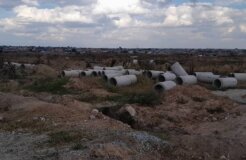
In Kambélé, an artisanal mining hub in Cameroon’s East region, 18-year-old Jérémie Nathan sits on a mound of excavated earth holding a hand-shovel. Until last month, he cleared gravel lines for Zhenguo Sarl, a foreign-owned semi-mechanised mining company operating in the area. Today, the excavators are chained and silent. A central government decree has ordered more than 200 of these companies across the East and Adamawa regions to halt operations immediately, deploying military personnel to seal their heavy machinery.

Would you like us to summarize articles for you?
The sudden shutdown aims to address a long-standing crisis: Cameroon’s subsoil wealth is being systematically siphoned off by foreign-led syndicates, leaving local communities with severe environmental damage and zero economic security. While the Ministry of Mines frames the suspension as a necessary step to clean up the sector, the sudden withdrawal of corporate machinery has cut off the precarious livelihoods of thousands of local labourers who depend on corporate waste to find gold.
‘The ministers think they are only punishing the big companies, but they are starving us,’ Jérémie told FairPlanet in Kambélé. ‘We cannot dig twenty metres deep with wooden pans and hand-shovels. We used to live off the scraps the excavators brought to the surface. Now no new dirt is coming up.’
The trigger for the government's radical intervention is a massive gap between national export records and international trade data. In 2023, an audit by the Extractive Industries Transparency Initiative (EITI) revealed that while Cameroon's official customs ledgers recorded the export of just 22.3 kilograms of gold, import databases in the United Arab Emirates (UAE) showed that 15.2 tonnes of gold had arrived from Cameroon during that same period.
Serge Hervé Boyogueno, General Manager of the National Mining Corporation (SONAMINES), recently detailed the scale of this parallel trade during an appearance on the state television programme Actualités Hebdo. Between 2021 and 2025, official Cameroonian customs accounted for a negligible 44 kilograms of gold exports. Meanwhile, matching import statistics from the UAE exposed that over 148 tonnes of gold had arrived from the country over those four years. This means less than one per cent of actual exports went through formal, taxed channels, costing the state billions of pounds in lost revenue.
To regain control, the Ministry of Mines is attempting to centralise all gold commercialisation under SONAMINES to build a national sovereign gold bank. Under strict new directives, any mining company wishing to break official seals and resume operations must forfeit an upfront environmental rehabilitation bond of 63 million CFA francs, declare a minimum production threshold of 5 kilograms of gold per month, and switch from open-pit panning to closed-circuit processing systems within six months.
Before the freeze, only 57 semi-mechanised mining companies held valid licences to operate in Cameroon. The government has permanently revoked 39 of those licences due to non-compliance and site abandonment, leaving 110 suspended corporate entities facing legal battles.
However, corporate operators argue that the state’s enforcement ignores its own administrative failures. Bureaucratic delays in Yaoundé mean that obtaining a formal mining title can take years, pushing operators into informal arrangements. To bypass equity laws – which mandate that Cameroonian citizens must hold at least a 51 per cent stake in mining firms – foreign consortiums routinely use local names to establish dummy partnerships, rendering domestic partners legal figureheads while stripping the state of regulatory oversight.
'We invested millions based on permits legally issued by the Ministry of Mines,' said an operations manager in Meiganga, speaking on condition of anonymity. ‘But the rules change every time a new minister takes office. We pay local development fees to regional elites for clearance, only for a military convoy from Yaoundé to arrive and seal our equipment the next week.’
This policy friction extends to the state apparatus itself. On state television, the head of SONAMINES openly questioned the practicality of the Ministry’s 5-kilogram monthly declaration threshold and pointed out that punitive local taxes actively drive legitimate actors into the black market. Most notably, he acknowledged that smuggling 148 tonnes of gold requires high-level domestic complicity: ‘If you don’t have accomplices, you cannot smuggle our gold, because our different gateways are secured accordingly.’
While officials and corporate executives debate regulatory thresholds in Yaoundé, the practical fallout is borne by families in the East region. The suspension of corporate activity has stopped the machines but left the local population without alternative income. Denied artisanal permits by the same bureaucratic bottlenecks, desperate villagers are entering the hazardous, unrestored corporate craters left behind by the suspended firms.
This regulatory vacuum has direct human consequences. Local civil society organisations such as Forêts et Développement Rural estimate that over 200 young miners have lost their lives in water-logged mining pits across the East region over the last few years, due to landslides and a lack of site restoration.
‘We know the pits are unstable, but hunger is an immediate threat, while a landslide is just a possibility,’ Angeline Ngono, a local mother living near an excavation site where an 18-year-old miner was buried alive, told FairPlanet. ‘The government has sealed the excavators, but left the open graves behind.’
Chinese mining consortiums such as Jing Fing and other foreign operators are currently keeping their technical teams on standby in forest camps, betting that the political divide between the Ministry of Mines and SONAMINES will eventually force Yaoundé to lower its entry barriers. Until the state pairs its corporate enforcement with immediate environmental restoration and legal channels for artisanal miners, Cameroon's gold mining sector will remain structured around institutional paralysis and localised risk.
 | Louvier Kindo Tombe Author |
By copying the embed code below, you agree to adhere to our republishing guidelines.