- About
- Topics
- Story
- Magazine
- In-Depth
- Opinion
- News
- Donate
- Signup for our newsletterOur Editors' Best Picks......Send
Read, Debate: Engage.
| September 05, 2026 | |
|---|---|
| topic: | Natural disaster |
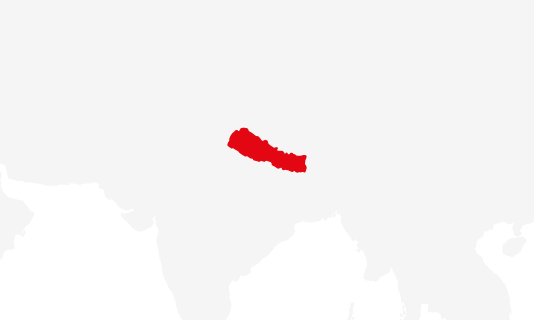
| tags: | #Nepal, #flash floods, #climate change, #natural disaster |
| located: | Nepal |
| by: | Bal Krishna Sah |
Karan Singh Tamang was in Kathmandu on August 26 when he last spoke with his younger brother, Bishal Singh Tamang, 24, who was working at one of the hydropower dams along the Trishuli River—the dam has since been swept away by the flood.

Would you like us to summarize articles for you?
‘My brother was working there as an operator. We spoke to him around 7:00 am in the morning, and everything was fine. By 9:00 am his phone could not be reached,’ he says.
Following news of the flood and devastation, he rushed immediately to the rescue site at Nuwakot, where he has waited since early morning for news. ‘The authorities have not given us any information at all. We would go back home if the rescue team or security personnel informed us whether my brother is alive or dead,’ he says.
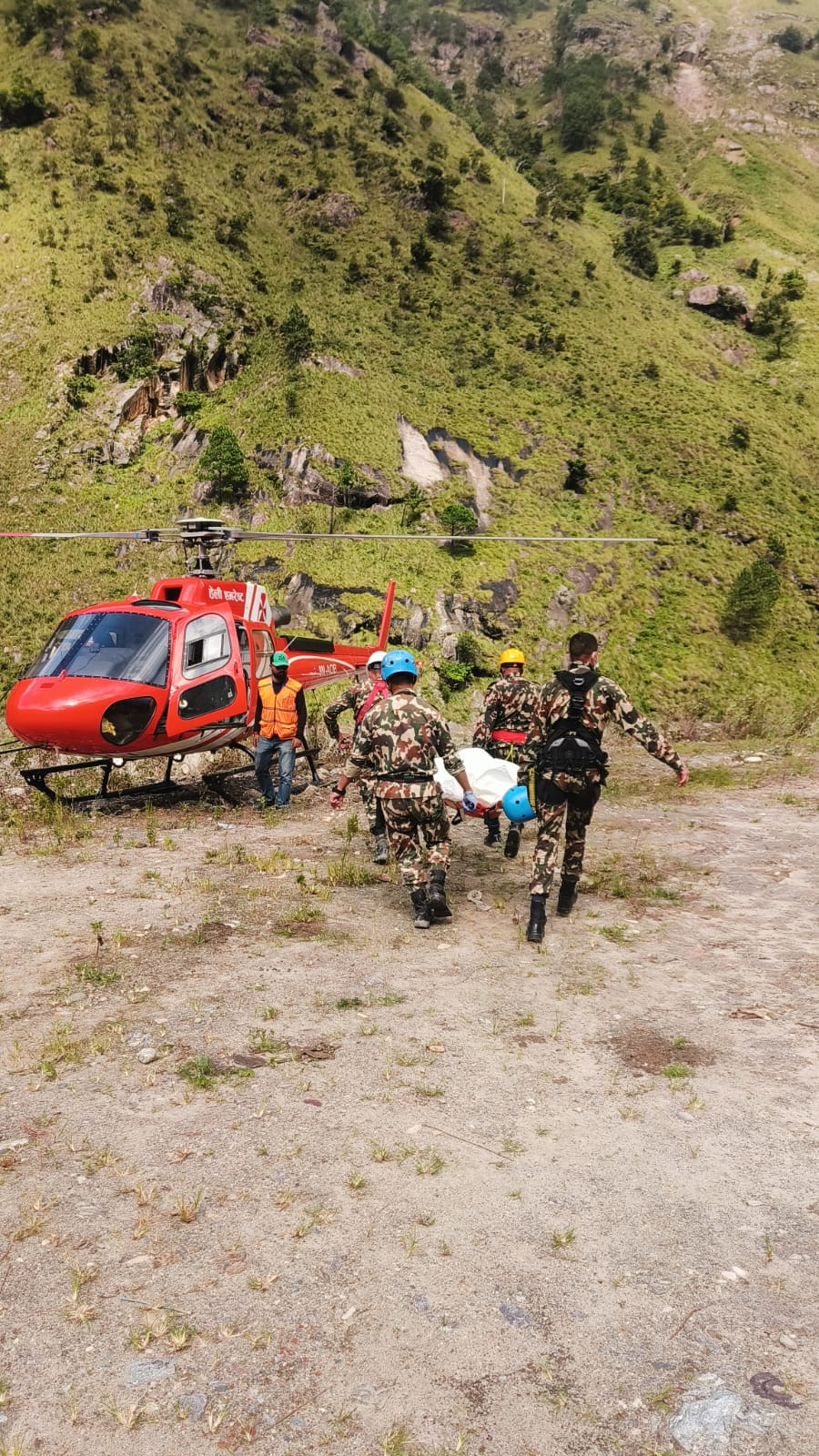
Nepali Army personnel carry a stretcher toward a waiting rescue helicopter on a hillside in the flood-affected region. Karan Singh Tamang was among the relatives who waited at a similar rescue site in Nuwakot for news of a missing family member.
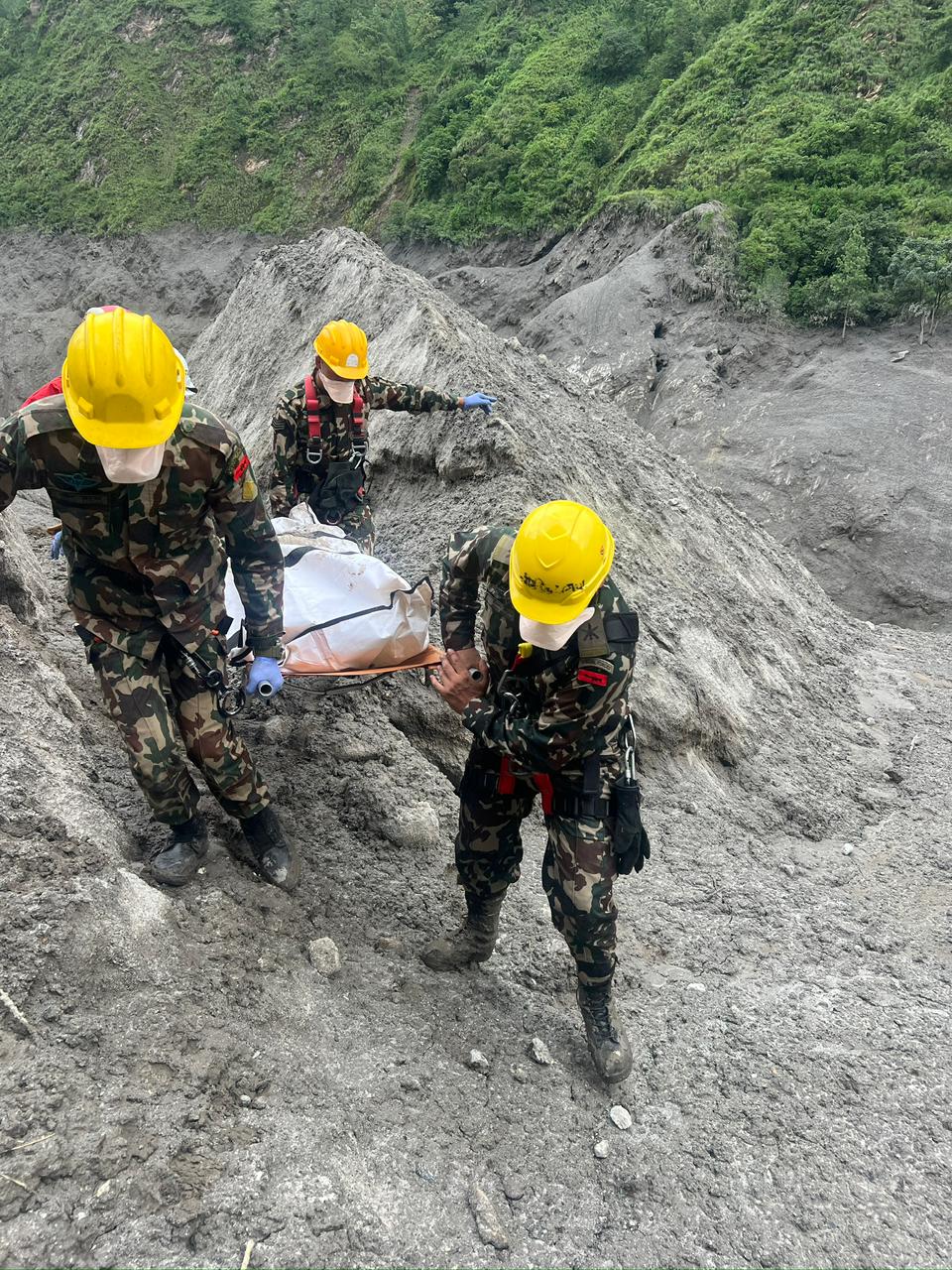
Rescue personnel carry a body recovered from the debris field across the flood-scarred terrain near Nuwakot.
He was not alone. Hundreds of Nepalis have faced a fate they never imagined. An ordinary day for Dhunge Bazaar residents turned into a nightmare within a matter of seconds. Many have lost loved ones and everything they had accumulated over decades.
Anita Devi, 42, was urging her daughter Saraswati Kumari to eat before leaving for school. Moments later, Anita heard people shouting, ‘Run, run, it's a flood!’ At the time, she was trying to open her shop in Dhunge, on the other side of the Trishuli River in Bidur Municipality, Nuwakot. ‘I left my key there and ran for my life. In less than two minutes, my shop, flat, and the entire market were inundated,’ she says.
‘Now I have nothing left. Everything—all my earnings from over 30 years—has been washed away.’
She adds, ‘My friend's wife and son are both gone. In my neighbourhood there was a shop run by a couple, and they were buried too.’
Eyewitnesses, including Anita and Saraswati, said the water rose to 30 to 40 metres high, sweeping away major market areas along the Trishuli River, including Dhunge. Saraswati says she escaped the flood because she had already left for school, which sits at a higher elevation than the area that was hit.
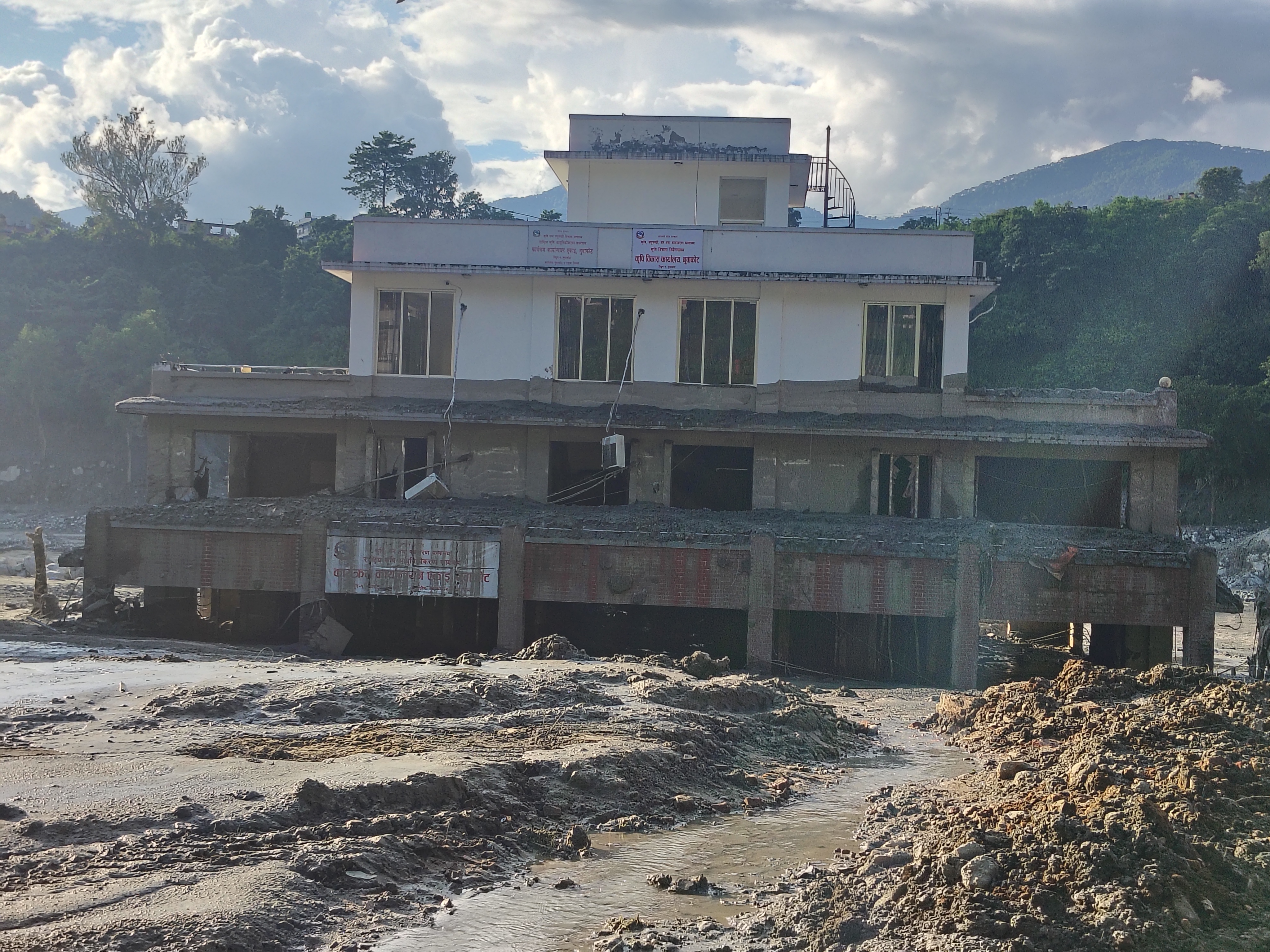
A government office building in Nuwakot stands gutted after floodwater and debris tore through its lower floors, leaving mud lines visible up to the second storey.
Tulsa Lamichhane, 36, recalls seeing people filming the flood from bridges that were later swept away. ‘I had never seen anything like this in my life. Flooding isn't a strange experience for us, but this one has completely shocked and devastated everyone here. The market doesn't exist anymore,’ she says.
Eyewitnesses estimated that more than 300 houses have been completely washed away by the flood in Dhunge, Nuwakot.
Surat KC, who works at the District Veterinary Office in Nuwakot—located right at the edge of the Trishuli River in Dhunge Bazaar—says the flood reached as high as a three-storey building and swept away everything in its path. ‘It was just 15 minutes after we got word that the water level was rising in the river, starting from Syafrubesi and Timure in Rasuwa district,’ he says. ‘By the time we ran for our lives, the entire Trishuli, Dhunge, and Betrawati bazaars were covered in mud and swept away.’
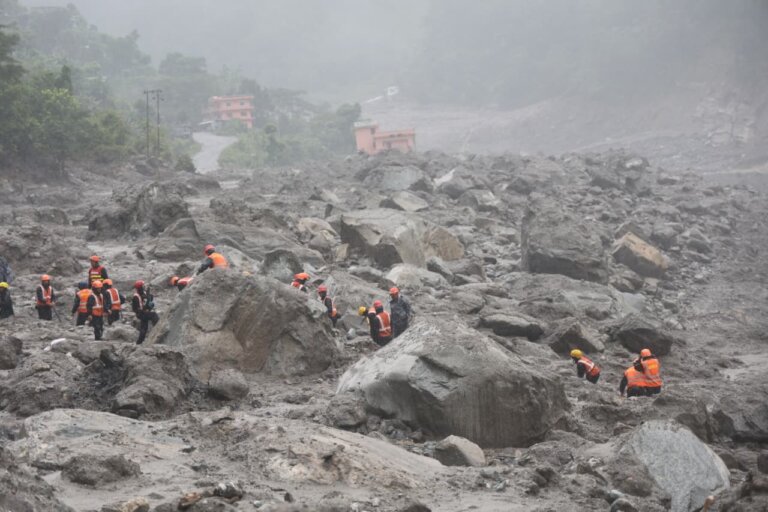
Rescue workers in high-visibility vests search a vast field of boulders and debris left behind by the flood, with damaged houses visible on the hillside above.
On Wednesday, August 26, a severe flash flood devastated regions along the Bhote Koshi and Trishuli rivers. Experts and officials remain divided on its exact cause — a question examined in more detail below.
The flood affected eight districts of Nepal, with Chitwan recording the highest casualties, along with Rasuwa, Nuwakot, Dhading, Tanahu, Nawalparasi East, Nawalparasi West and Gorkha. The Government of Nepal has declared the affected municipalities ‘crisis-affected areas’ for a period of three months.
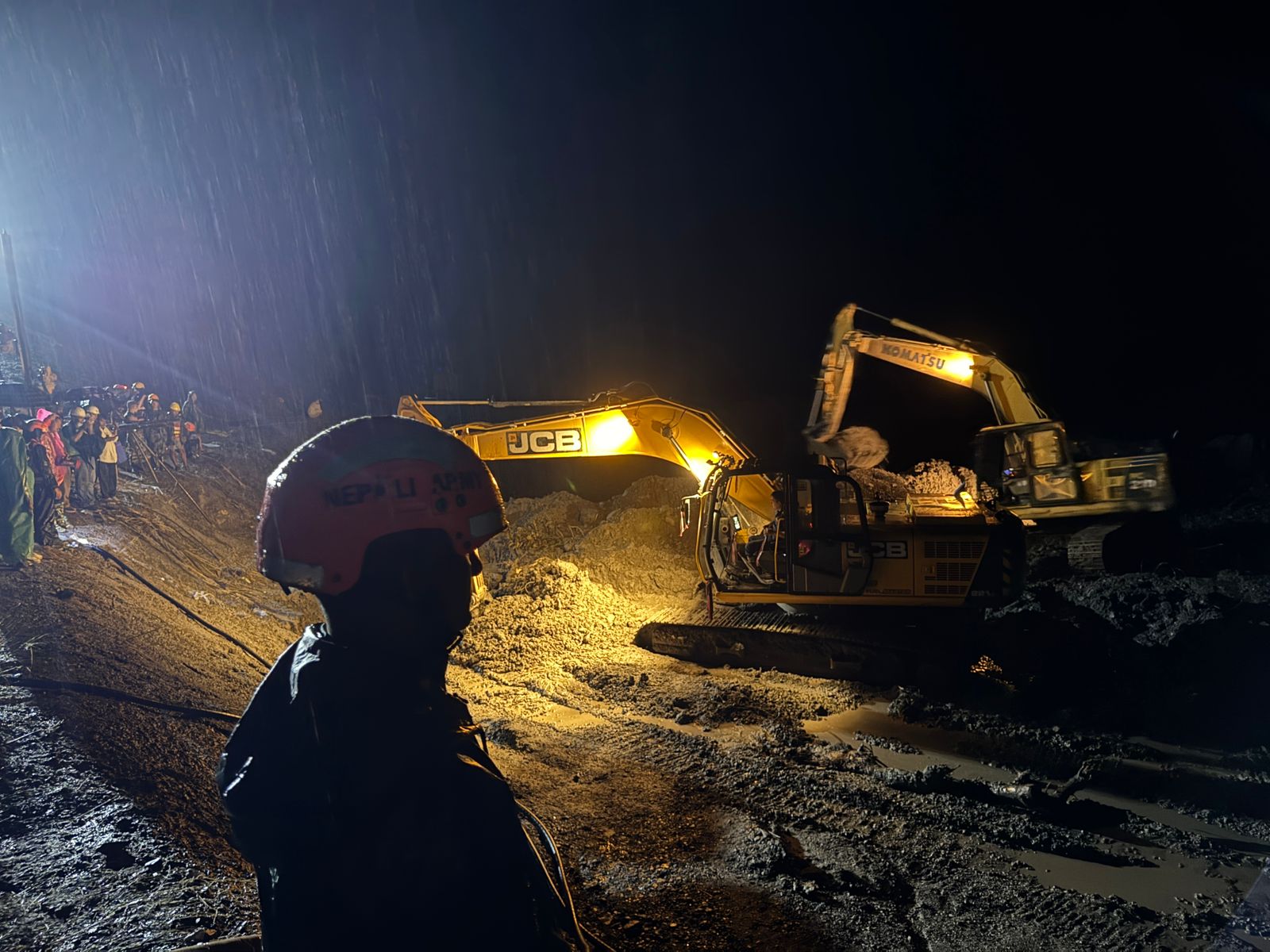
Excavators work through the night under floodlights and heavy rain as crowds of local residents look on, searching for bodies buried beneath metres of mud and rock.
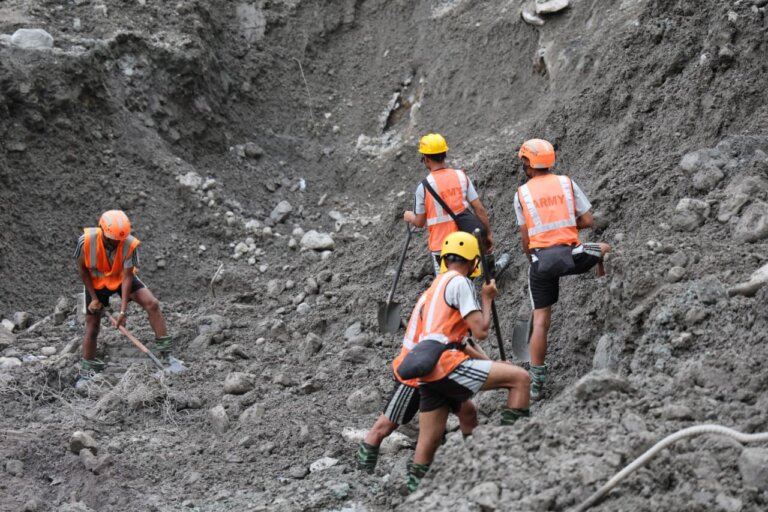
Nepali Army personnel dig by hand through thick grey sediment left behind by the flood.
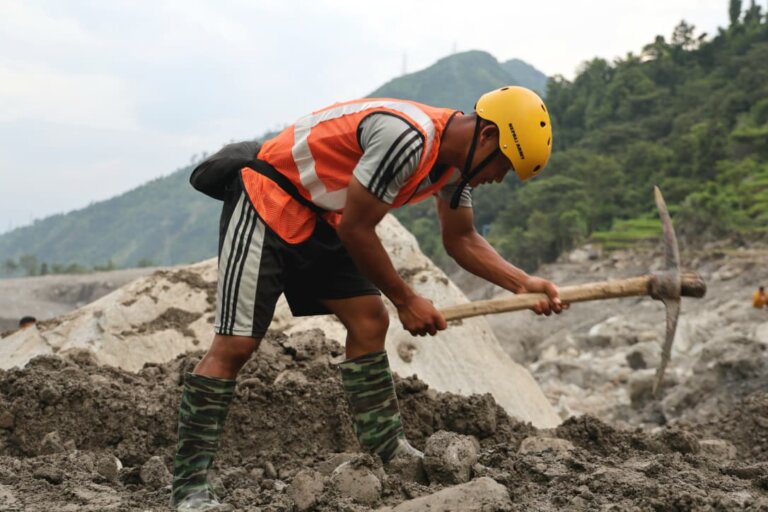
A rescue worker breaks up compacted mud with a pickaxe as search operations continue across the debris field.
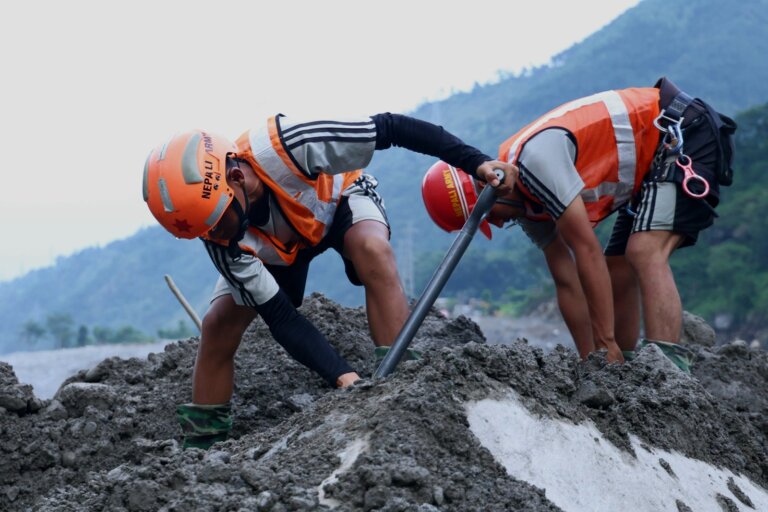
Rescue personnel probe a mound of sediment with a metal rod, a method used to locate bodies buried beneath the surface.
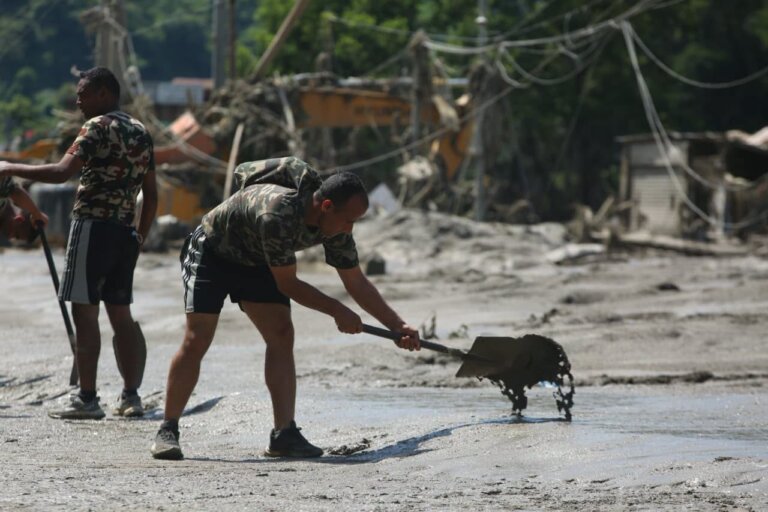
Soldiers shovel mud from a road in a flood-affected settlement as the clean-up operation continues alongside the search for the missing.

A Nepali Army rescuer reaches into a debris-filled culvert during search and rescue operations near Nuwakot.
Rescue personnel carry a body recovered from the debris field across the flood-scarred terrain near Nuwakot.
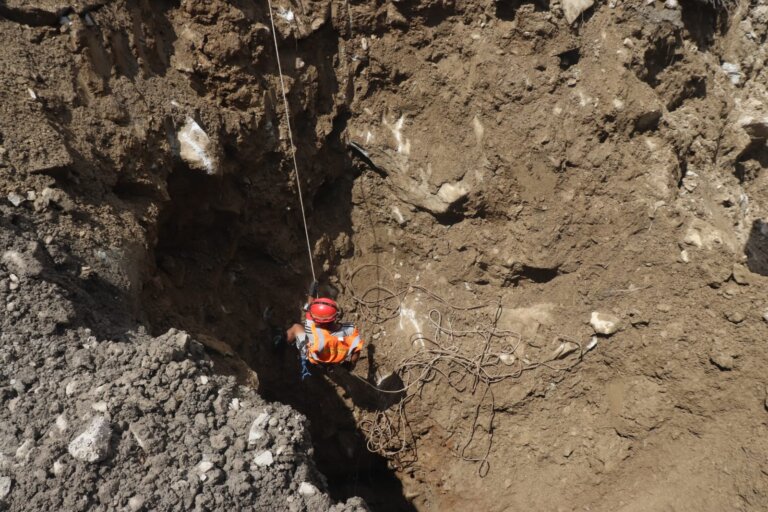
A Nepali Army rescuer is lowered by rope into a deep pit carved into the debris field during the search for the missing.
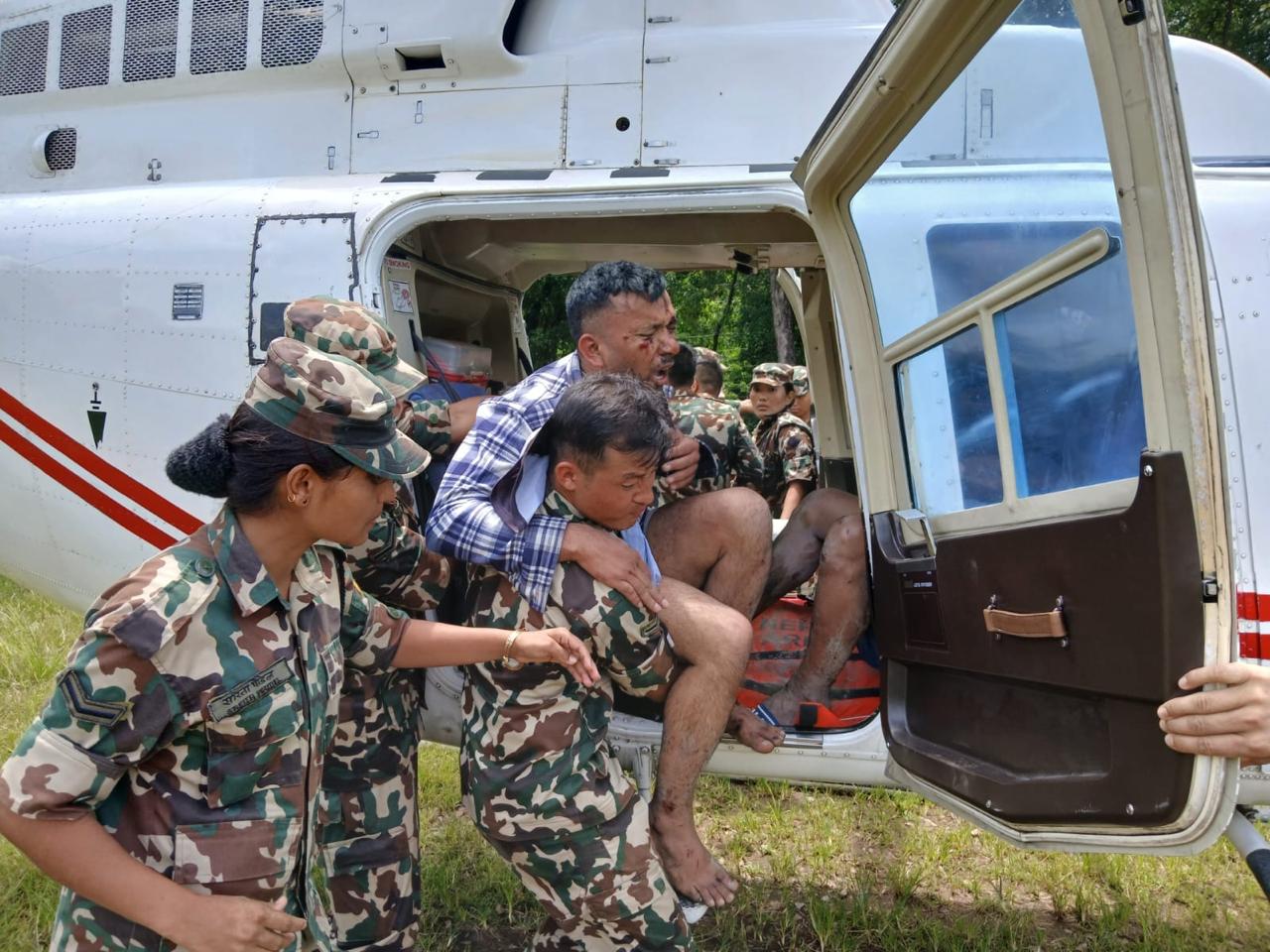
Nepali Army medical personnel carry an injured survivor into a rescue helicopter, one of several urgent medical evacuations carried out during the operation.
Dr Prabhash Roy, a DNA collector at a district hospital in Chitwan, has been involved in the recovery of dead bodies from the Narayani River in the Chitwan district of Nepal, some 200 kilometres downstream from the Trishuli River. He says, ‘The authorities decided to bury more than 200 bodies after collecting DNA samples to prevent possible infections.’
According to him, the number of dead bodies has been piling up beyond the capacity of the hospital and holding centre to store them. ‘As a result, based on the consultation with the forensic team and authorities, it has been decided to bury the bodies in a nearby forest.’
When asked whether he had seen anything like this before, he says, ‘No. This was the toughest job to date for me. We can only pray to God because the death toll is likely to increase significantly.’
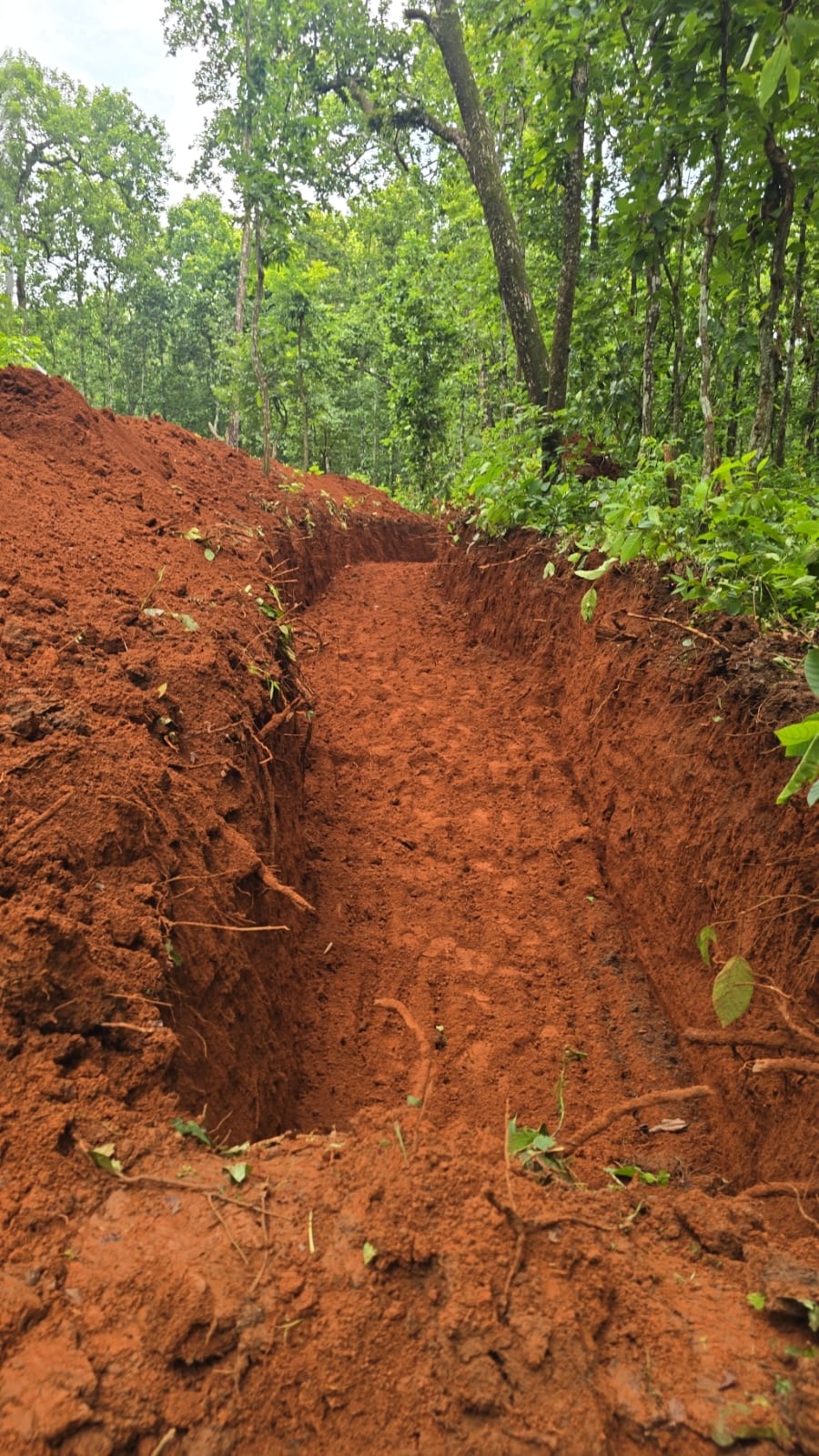
A freshly dug trench cuts through forest land near Chitwan, part of the burial ground where unidentified flood victims have been laid to rest after DNA samples were collected.
Foreign Minister Shisir Khanal initially suggested that an earthquake triggered the glacial outburst, leading to the devastation — though the US Geological Survey has since said the seismic signal in question was likely produced by the avalanche itself, not a separate earthquake. He appealed for international assistance in technologies to locate people who may still be alive in affected areas, rapid forensic and DNA analysis, and mortuary facilities for keeping recovered bodies.
As of the evening of August 30, more than 30 bridges had collapsed and 42 kilometres of roads had been swept away, with communications disrupted for at least a day. At least 1,259 bodies had been recovered, though rescue operations for 5,083 missing remain ongoing. Any figure cited at this stage is likely to change, but the death toll is expected to rise significantly.
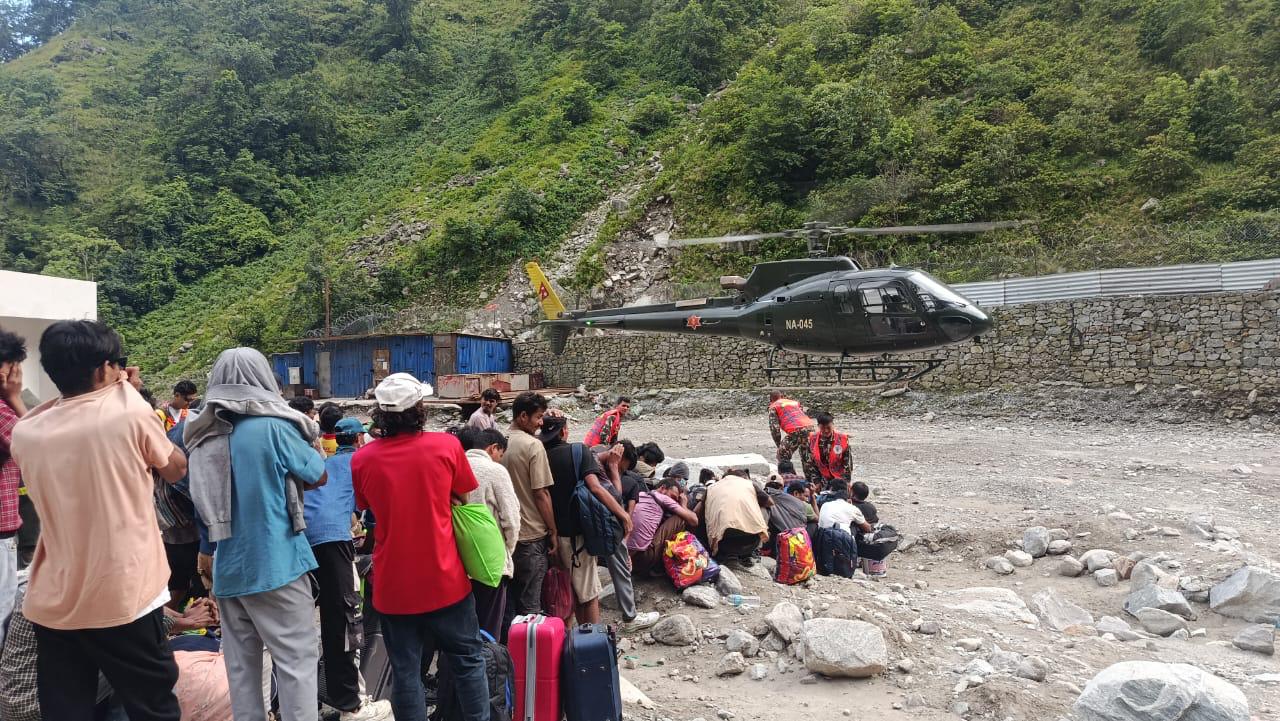
Stranded residents wait with their belongings for a military helicopter evacuation from the flood-affected area.

An evacuee, dressed in the robes of a Buddhist monk, walks away from a Nepali Army helicopter after being airlifted out of the flood-affected area.
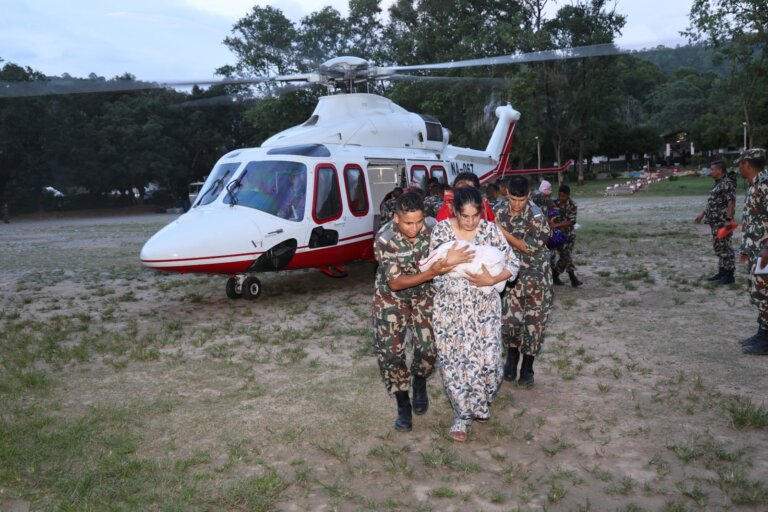
Nepali Army soldiers help a woman carrying an infant off a rescue helicopter after evacuation from the disaster zone.
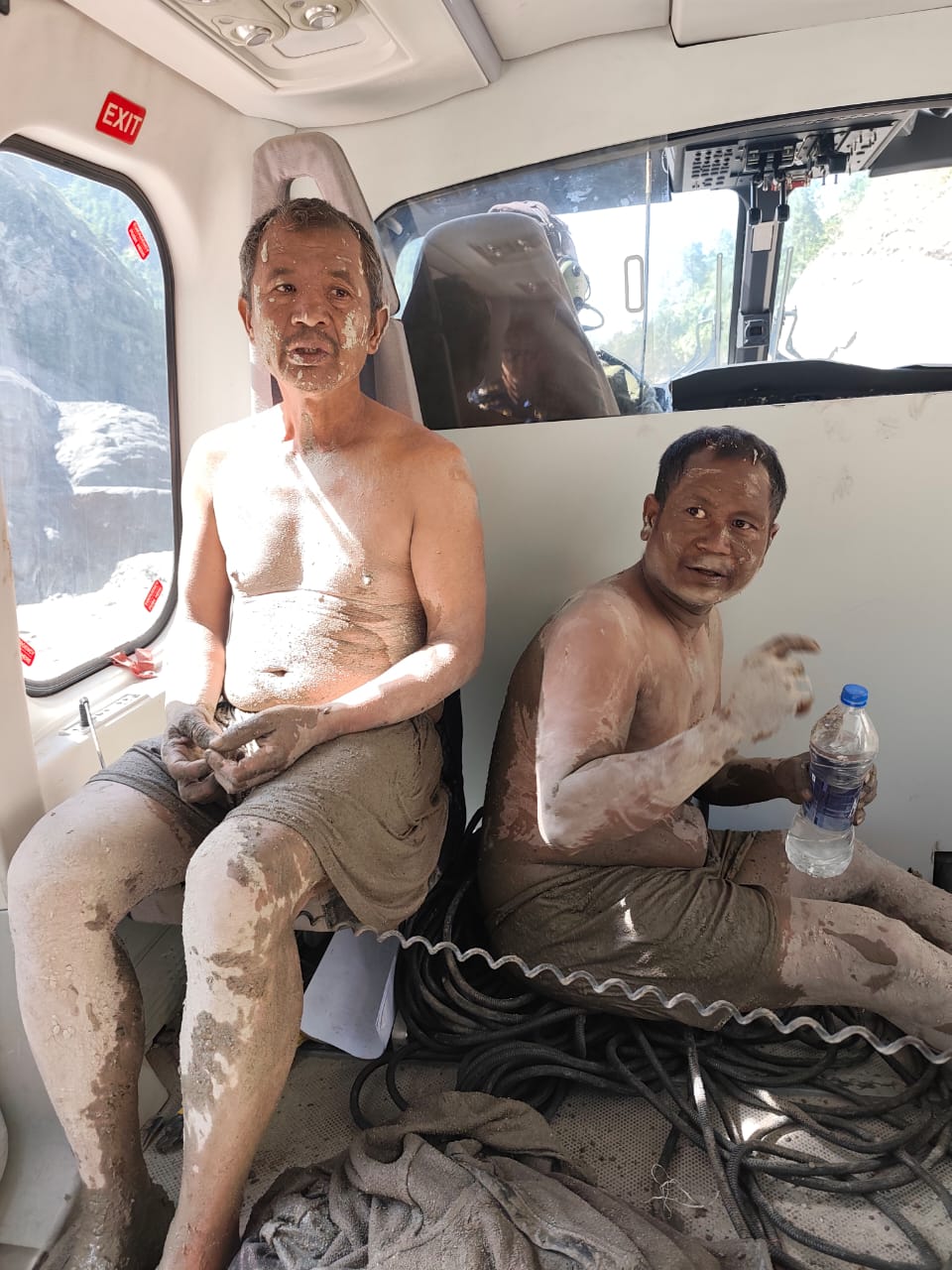
Two flood survivors, covered head to toe in mud, sit inside a rescue helicopter shortly after being airlifted to safety.
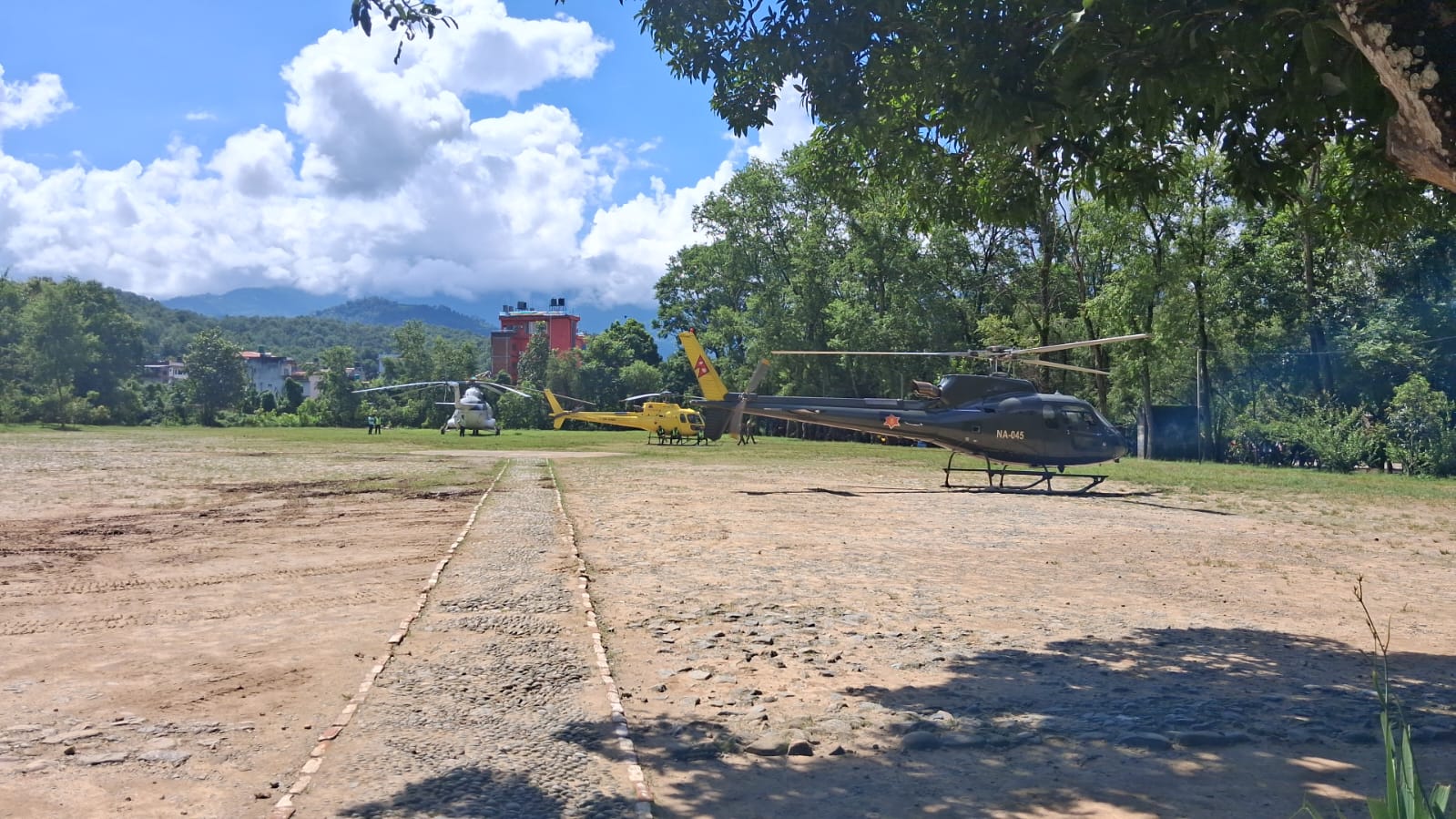
Rescue helicopters stand ready on a staging ground near Kathmandu, part of the fleet mobilised for the search, rescue and evacuation operation.
Prime Minister Balendra Shah visited a rescue centre in the flood-affected region as the search and recovery operation continued, one of several senior officials to travel to the area in the days after the disaster.
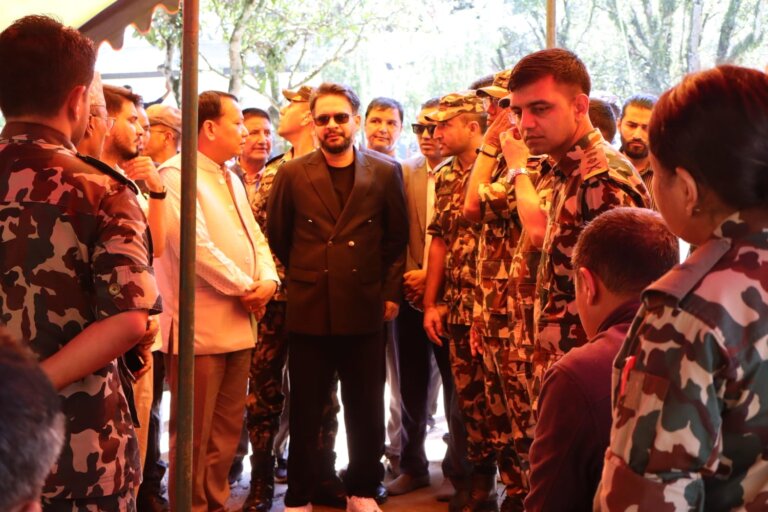
Prime Minister Balendra Shah is briefed by Nepali Army officers during a visit to a rescue centre in the flood-affected region.
A preliminary analysis of satellite imagery from Planet Labs, conducted by the National Disaster Risk Reduction and Management Authority (NDRRMA), identified the source of the flood as an ice-rock avalanche roughly 20 kilometres northeast of the Rasuwa–Rasuwagadhi border crossing with Kerung and Gyirong on the Chinese side. The Lhende River, a tributary of the Bhote Koshi, was dammed by the landslide before the debris surged through Timure and poured into the Trishuli River.
However, the exact cause of the cross-border disaster remains unclear, with experts struggling to reach a consensus. While many have attributed it to a glacial burst near the Tibet border, others dispute that this alone is responsible. The situation remains precarious.
Dr Dhiraj Pradhananga, UNESCO Chair in Mountain Cryosphere and Water, said the glacier collapse was likely associated with an englacial lake or water dammed beneath the ice. ‘Now there are two lakes, and probably three lakes, formed behind the debris and fallen ice. They could breach at any time,’ he said.
He noted that researchers are seeking higher-resolution satellite imagery and have already been in contact with relevant agencies. ‘We will provide more confirmed data. But for now, there are temporary dammed lakes, and they are potentially dangerous and could cause further flooding.’

Nepali Army personnel and local workers build a temporary bamboo and pipe structure, part of the effort to restore access and infrastructure to flood-cut communities.
 | Bal Krishna Sah Author |
By copying the embed code below, you agree to adhere to our republishing guidelines.