- About
- Topics
- Story
- Magazine
- In-Depth
- Opinion
- News
- Donate
- Signup for our newsletterOur Editors' Best Picks......Send
Read, Debate: Engage.
| September 03, 2026 | |
|---|---|
| topic: | Natural disaster |
| tags: | #Nepal, #Tibet, #floods, #climate change, #natural disaster |
| located: | Nepal |
| by: | Rajendra Pokhrel |
At the Nepal Army’s No. 1 Training Centre in Bidur, Nuwakot, a large crowd of relatives of the missing had gathered as army helicopters arrived and departed continuously for rescue operations. Each time one landed, anxious relatives checked the list of rescued people posted at the gate, waiting for news of their own family members.

Would you like us to summarize articles for you?
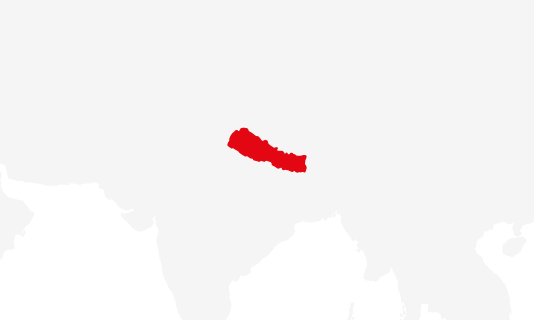
FairPlanet’s correspondent visited Nuwakot, northwest of Kathmandu, on Saturday, three days after a flood swept down the Bhotekoshi River from Tibet, killing hundreds of people and leaving thousands more missing.
Recalling the event, Tej Prasad Timilsina, an employee of the Agricultural Development Bank in Bidur, Nuwakot, told the FairPlanet correspondent that, ‘It was around 9:10 in the morning. I had already reached the office. My relatives in Rasuwa called and gave news that a flood of a scale they had never seen or even imagined had arrived. As soon as I got the news, I called my friends and we went outside. When we went out, we saw a huge flood coming in the Trishuli. We saw major human casualties in the market.’
Rameshwar Das, originally from India’s Motihari district and running a rental shop in Nuwakot, said, ‘My brother, who was at the Chilime hydropower area in Rasuwa, called first with the news. As soon as I got the news, I fled with my family—three of my relatives are still missing. My shop has been completely buried by the flood. My brother’s phone call saved my life; I fled taking my son and wife with me.’
In Betrawati, Rasuwa, Dilkrishna Shrestha, 45, said the human and physical damage was beyond imagination. ‘It was breakfast time in the morning and everyone was at home. After getting information on social media that a flood was coming, my wife and I ran and managed to save our lives. My mother-in-law, father-in-law, and father are missing in the flood. We lost everyone we loved to the flood. We have lost everything—property and belongings. It feels like a dream. I sit here and remember friends and relatives; it feels like some kind of film. I have neither property nor my loved ones.’
Dr Bishal Bhandari, Central President of the Nepal Red Cross Society, said, ‘We are working to establish shelters in various locations for relief and rescue of victims. Since there is no road access in Rasuwa, it has been difficult to deliver relief materials there… In the coming days, there is a need to change our policies regarding development projects and physical infrastructure construction.’
The death toll has climbed to 1,114, with 3,926 people still missing, according to the National Disaster Risk Reduction and Management Authority (NDRRMA); more than 90,000 people have been affected in total, according to the Nepal Red Cross.
Based on preliminary studies, the NDRRMA has concluded that a snow-and-rock avalanche in the Nepal-China border area caused a debris-laden flood that entered the Lhende Khola.
However, hydrologist and meteorologist Dr Ambarish Pokhrel said the avalanche alone does not fully explain the flood; the combined effect of a rock-and-debris avalanche followed by a glacial lake outburst appears to be the main cause.
Pokhrel told FairPlanet, ‘A large avalanche containing rock, soil, and large boulders may have fallen from a steep part of the mountain. But it doesn’t seem possible for an avalanche alone to produce such a large volume of water in such a short time. Therefore, there must have been a hidden glacial lake below the avalanche or in its flow path that burst…’
Scientists at the International Centre for Integrated Mountain Development (ICIMOD) and Tribhuvan University say the disaster reflects a broader, worsening pattern across the Himalayas. The Lhende Khola has now flooded twice in fourteen months, said ICIMOD’s Saswata Sanyal, calling it a textbook case of ‘cascading hazards: a cryosphere event becomes a flood in a settlement within hours.’ Fellow ICIMOD specialist Mohd. Farooq Azam said the rising frequency of such disasters is ‘another cause for regional collaboration’ between Nepal and China. ICIMOD’s Neera Shrestha Pradhan and Tribhuvan University’s Basanta Raj Adhikari both called for faster, better-targeted early warning: Pradhan cited community-based systems ICIMOD has helped implement across the region, saying a cross-border version ‘could be a strong example of cooperation between the two countries,’ while Adhikari said the risk facing communities like Rasuwa and Betrawati is ‘changing dramatically’ and called for real-time information to reach decision-makers faster.
Twelve hydropower projects have been affected, knocking 431.1 MW off the national grid, and more than Rs. 15 billion in damage has been done to 19 bridges and 40 kilometres of road. Forty-four Nepal Army personnel, 28 police officers, and 13 Armed Police Force personnel are among those still missing, along with hundreds of ordinary citizens whose settlements were swept away.
Of 289 foreign nationals and tourists rescued so far, the largest groups are Indian (180) and Chinese (89) nationals, according to the Nepal Tourism Board, which says 591 foreign nationals and tourists remain out of contact.
The government has declared affected areas ‘disaster crisis zones’ for three months and mobilised 19,895 security personnel — 8,399 Nepal Army, 7,213 Police, and 4,203 Armed Police Force personnel — for search and relief work. India and China have each sent rescue teams to free people trapped in hydropower tunnels, while the Asian Development Bank, World Bank, and the US and Australian governments have together pledged more than $173 million in grants, loans and assistance.
Chinese state media reported at least three confirmed deaths in Gyirong County, Shigatse city, with the number of missing rising from roughly 265 immediately after the flood to more than 500 as search operations continue.
Search and rescue operations were continuing on both sides of the Nepal-China border at the time of publication, with officials warning that the full toll — in lives and in damage to Rasuwa, Nuwakot and Gyirong County alike — may not be clear for weeks. For the thousands of families still waiting for news of missing relatives, the flood that struck last Wednesday has not yet finished unfolding.
 | Rajendra Pokhrel Author |
By copying the embed code below, you agree to adhere to our republishing guidelines.