- About
- Topics
- Story
- Magazine
- In-Depth
- Opinion
- News
- Donate
- Signup for our newsletterOur Editors' Best Picks......Send
Read, Debate: Engage.
After Jiddaru Manniru’s community in Bama, northern Nigeria’s Borno state, was ‘seized’ by insurgents in 2014, her major worry became how she and her family would cope elsewhere. The attack displaced them, forcing them to trek to the state capital Maiduguri hurriedly – usually a three-hour drive – and then board a vehicle to Fune village internally displaced persons (IDP) camp in neighbouring Yobe state.
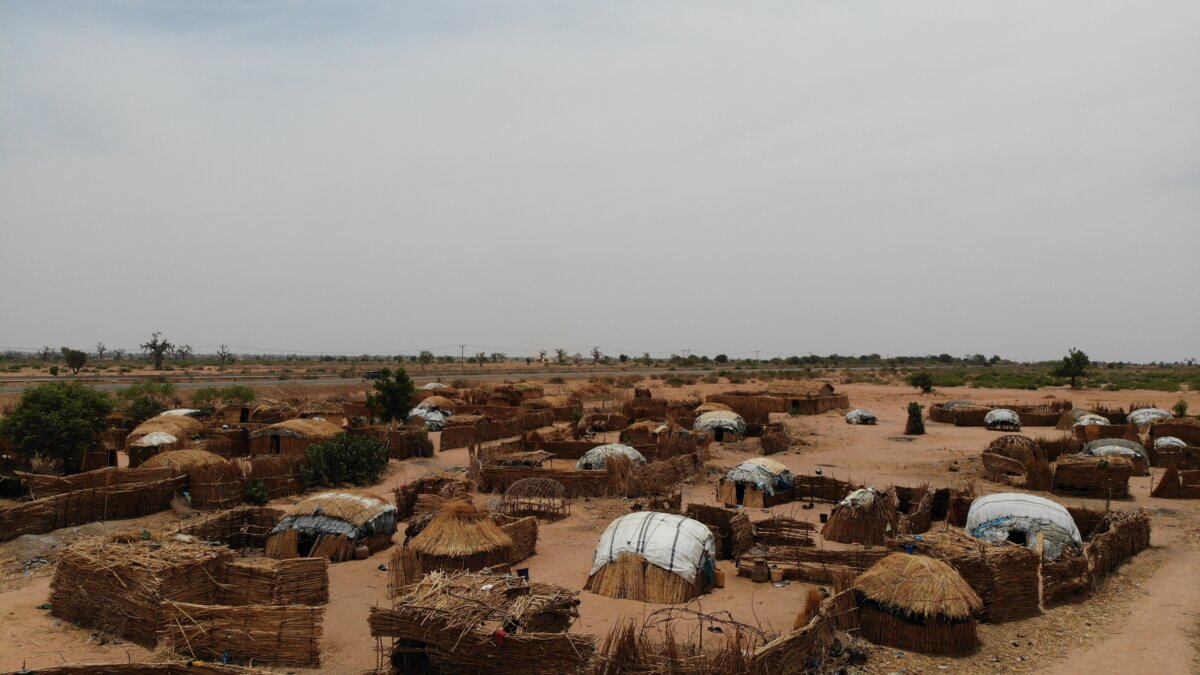
The camp is an informal host community settlement set up by locals for displaced families who reside in makeshift thatched houses. Life in the camp was completely strange to Manniru. One disturbing reality she witnessed was widespread child malnutrition: children who ate poorly and failed to gain weight.
This disturbed her because back in Bama, she had everything she needed, even as a child. They had cattle that helped them to meet basic needs when they sold them – until the insurgents attacked and carted away 50 of their cows. Seeing malnourished children worried her and made her fear raising children who would suffer the same fate.
Generally, children, as well as pregnant and lactating women, are most susceptible to malnutrition. But Manniru was in luck when the Mary Dinah Foundation (MDF), a non-governmental organisation preventing malnutrition in local communities in Africa, launched its Zero Hunger Programme that began with the distribution of lipid-based nutrient supplements at the IDP camp in 2020.
These supplements treat and prevent malnutrition. They are nutrient-rich pastes made from peanut butter, powdered milk, sugar, and vegetable oils, fortified with vitamins and minerals. MDF typically sources them from manufacturers in the United States, as well as from Nutri K and the Kenyan-owned food producer Ariel Foods FZE, which operates in Nigeria.
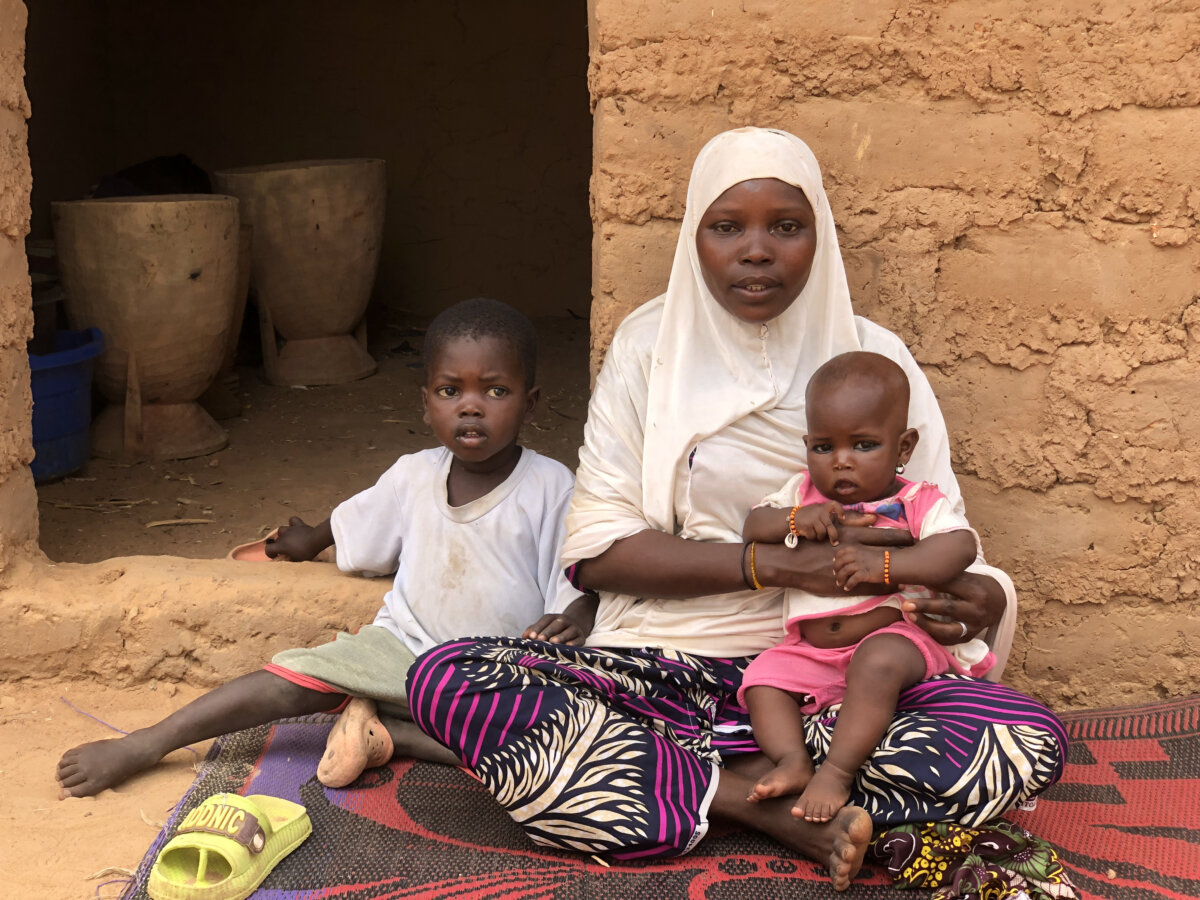
Three years after the distribution of the supplements began, Manniru conceived her first child, which automatically qualified her to receive the supplements. Manniru consumed the nutritional product daily during pregnancy. Once she delivered, she exclusively breastfed for the first six months before introducing daily supplements, continuing to breastfeed until their child turned two.
Jerry Ezike, MDF’s regional nutrition director, explained that the nutritional intervention is ‘specifically targeted towards the first 1,000 days of a child from when he is in the womb to when he is two years old.’ He explained that poor nutrition during this period can cause lasting damage to a child’s brain. ‘So you are ensuring that the child is well supplemented,’ Ezike added.
Manniru proudly watched her son put on weight and grow healthy. Fifteen months ago, she had her second child. As with the first, she received supplements from MDF to help her child’s growing brain and essentially prevent malnutrition.
‘My child takes the supplement daily. She looks healthy and there are good changes,’ 24-year-old Manniru told FairPlanet, as she adjusted the yellow hijab of her daughter. ‘The supplements give my child an appetite and so she eats well.’
Driven by conflict
Joseph Olusanya, professor of human nutrition at the Tai Solarin Federal University of Education, explained that malnutrition weakens the immune system and causes lifelong physical and cognitive impairment. While stunting occurs when a child is too short for their age due to chronic or long-term undernutrition, acute child malnutrition or wasting occurs when a child has very low weight for their height. Both conditions, Olusanya said, mostly happen when the child lacks access to sufficient and nutritious food particularly during critical growth periods, consequently increasing their vulnerability to diseases such as pneumonia and diarrhoea.
Malnutrition is not unique to the IDP camp where Manniru resides. Globally, 150.2 million children under the age of five were stunted and 42.8 million were wasted in 2024. Malnutrition plays a role either as an underlying cause or a major contributing factor to 45 per cent of childhood deaths worldwide.
In Africa, Olusanya said conflict contributes significantly to these malnutrition figures. In 2025 alone, an estimated 167 million people faced acute food insecurity on the continent, about 78 per cent of whom are in countries experiencing conflict, according to the Africa Center for Strategic Studies.
Northern Nigeria for example, where Manniru is based, is experiencing ongoing insecurity. Islamist militia Boko Haram, alongside its faction, Islamic State West Africa Province, has been waging an insurgency in the country’s north-east since 2009. The insurgency has resulted in thousands of deaths and millions of people being displaced, and has exposed nearly 6.4 million children under the age of five in the region to acute malnutrition.
‘[These days], farmers find it difficult to access their farms and it’s taking its toll on food production,’ Olusanya told FairPlanet in a phone interview. ‘If we don’t address insecurity, we might not be able to solve the problem of food shortage.’
Now, families trapped by conflict lose their livelihoods, struggle to feed themselves as a result, and then face severe hunger. Situations like this increase their risk of malnutrition. Adda Manga Mohammed, who sought refuge at the camp in Yobe, said the continued insurgency and attacks on her community in Borno made it unsafe for her family to continue the cultivation of groundnut, millet, and sorghum.
‘Before we came to the camp, we did not have any issue about food,’ the 35-year-old mother of four said. She gestured to her son, who had earlier gone to play with other children in the camp, to come and join her where she was sitting on a coloured mat in front of her mud house. However, she said that they had hope again when MDF, in addition to the nutrient supplements, started the distribution of specialised nutritious foods in 2022 to reduce hunger in Yobe State.
Ezike explained that the foundation introduced nutritious food distribution when it realised that ‘the reason there is a high rate of malnutrition is food insecurity, and our work will not make so much impact if there is hunger,’ he said. The specialised nutritious food is parboiled, so Ezike said, before distribution started, the foundation held cooking demonstrations to show the displaced people and locals how to prepare it.
Each person gets three packs, each of which weighs 1 kg containing a mixture of dehydrated food, including rice, carrots, onions, and lentils – enough to feed families for a month.
‘Food comes monthly,’ said 40-year-old Aisha Mohammed, who lost her husband, father, and elder brother during one Boko Haram attack on her community in Borno state in 2016. Survivors, including Aisha, stayed in a camp in Borno state for three years before moving to the camp in Yobe. When they arrived at the Yobe camp, ‘we experienced serious hunger [but] the food helped my family. If the foundation had not fed us, I don’t think we would be alive now,’ said the mother of five.
Funding gap
Ezike said the foundation started its intervention in Nigeria when the insurgency created a malnutrition crisis. However, he added that the foundation has now extended its intervention by providing food assistance and nutritional supplements to conflict areas in Cameroon and Chad. For both interventions, Ezike said the foundation collects relevant data before and after distribution mainly to help them to track progress and impacts.
Though challenges such as the delay that comes with logistics and shipping of the supplements from the United States and clearing them at the port hinder the foundation’s work, Ezike said that results are trickling in. Between 2021 and early 2026, Ezike said MDF distributed 27,864,000 supplements and 337,680 food packs to 292,034 vulnerable populations across conflict-affected communities in Nigeria, Cameroon, and Chad.
However, while distribution of nutrient supplements still happens in these countries, Ezike explained that the foundation has paused the distribution of food mainly because its donors now focus more on nutrient supplements.
But MDF’s bigger concern is funding to sustain the nutritional intervention. USAID has been the major funder of their interventions, but that becomes a problem now that the Trump administration has cut funding, contributing to an estimated 72 per cent funding gap for humanitarian nutrition.
Back in the IDP camp, Manniru sat in front of her thatched house watching six children push a locally-made cart loaded with six 25-litre jerry cans filled with water. Shortly afterward, Manniru went inside to get one of the nutrient supplements to feed her child.
‘It’s a relief seeing my child live healthy,’ she said, smiling. ‘The supplements are [indeed] beneficial.’
Image by Ekpali Saint